
Press release
04/08/2021
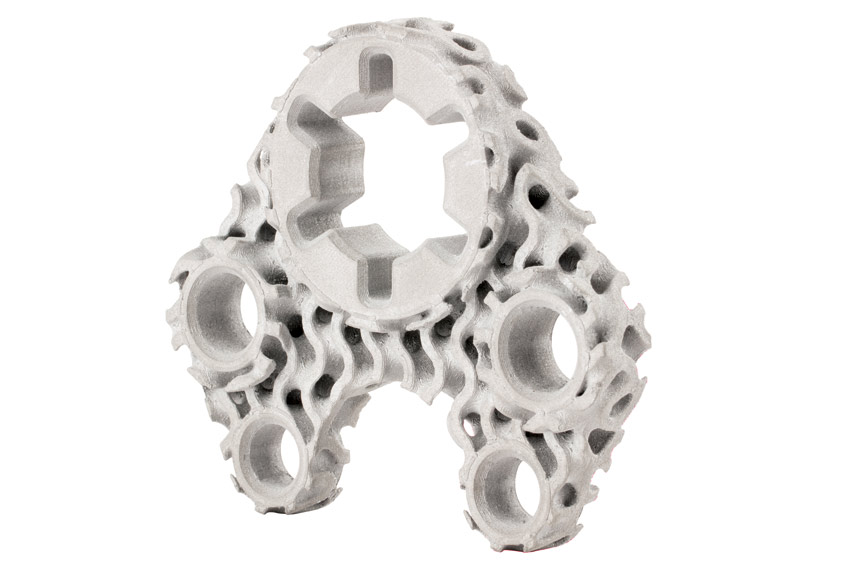
Desktop Metal announced it has qualified the use of titanium alloy Ti-6Al-4V (Ti64) for the Studio System 2, an accessible metal 3D printing platform that offers customers the easiest way to print high-performance metal parts in low volumes for pre-production and end-use applications. With plans to begin shipping Ti64 next month, Desktop Metal will be the first and only company to make the material commercially available for extrusion-based bound metal additive manufacturing technologies.
Ti64 is the most widely used titanium alloy and is characterised by its high tensile strength, corrosion resistance, and biocompatibility. With a high strength-to-weight ratio, Ti64 is considered an ideal material for high-performance production applications in industries such as aerospace and defense, automotive, and oil and gas. In addition, its biocompatibility makes it particularly desirable in medical applications, such as with surgical devices and implants.
The Studio System 2 produces Ti64 with exceptional mechanical properties. Tensile properties include 730 MPa yield strength, 845 MPa ultimate tensile strength, and 17 percent elongation. These mechanical properties exceed those set by ASTM F2885-17 standards for metal injection molded surgical implant applications.
"Titanium has been a challenging material for bound metal 3D printing because it is both extremely reactive in powder form and difficult to sinter," said Jonah Myerberg, co-founder and CTO of Desktop Metal. "We are excited to be the first to commercialise the most common titanium alloy, Ti64, for 3D printing through our Studio System 2 solution, opening the door to more accessible production of high-performance titanium parts."
"3D printing with titanium is incredibly valuable in industries like aerospace because of the material's ability to support complex and lightweight designs," said Steve Wozniak, co-founder of Privateer Space, a new satellite company focused on monitoring and cleaning up objects in space. "With the Studio System 2, the team at Privateer Space will be able to achieve the affordability and lightweighting capabilities needed to pave the way for our satellite design and launch. This technology is truly a differentiator in helping companies to accelerate innovations in space and, through the material advancements that Desktop Metal is making, we have an amazing opportunity to collaborate and keep space accessible for future generations."