


Press release
02/02/2023
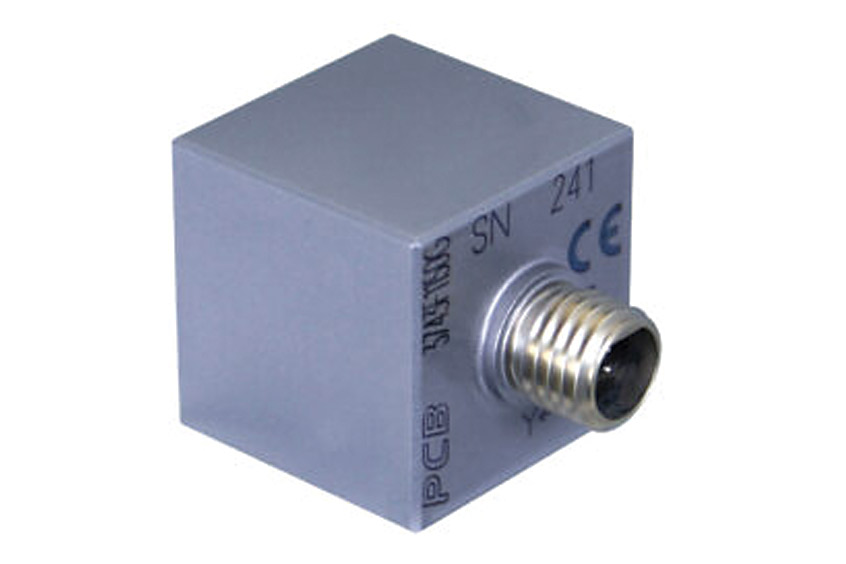
PCB Piezotronics (PCB®) is introducing our new model 3743F, extending our "F" series of MEMS DC response sensors, which also includes 3711F, 3713F, and 3741F.
PCB® Model 3743F utilises variable capacitance MEMS technology for stable and accurate measurement in a wide input voltage range from 5 to 32 Vdc. It simultaneously measures acceleration and low-frequency vibration in three mutually-orthogonal axes (X, Y, Z).
Designed and developed by PCB, model 3743F triaxial differential output accelerometer features:
Stable and accurate measurements using MEMS technology
Ability to measure low frequencies and long duration events
Excellent linearity (0.3%) and low noise
Exceptional Thermal Performance (+/- 1% from -54 to 121 C)
Available in six measurement ranges: ±2, ±10, ±30, ±50, ±100 and ±200 g's
Model 3743F makes precise measurements in harsh environments, providing accurate readings over a wide operating temperature range. It is ideal for testing aircraft flight/flutter, in-flight vibration, low frequency aircraft/airframe vibration measurements, space launch vehicle vibration, automotive ride quality, road load data acquisition (RLDA), and structural dynamics. For additional applications, please talk to your PCB representative.
The titanium package is stud mounted and has an integral hermetic 9-pin receptacle that mates with our 037Gxx / 037ENxxxNU detachable shielded cable assembly, sold separately. The 3743F is currently shipping in 6-8 weeks.
The Model 137B29B sensor broadens PCB's current line of single and dual channel ICP® blast pencil probes, and continues to feature a unique pencil shape that allows shock waves to progress smoothly across the sensor, providing distortion free measurements.