
Airframer news
23/01/2025
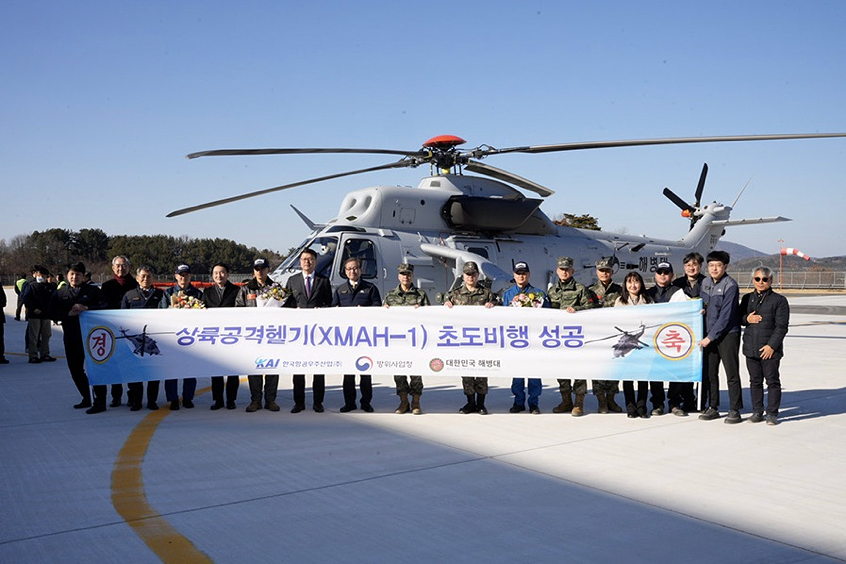
The demonstration flight displayed control performance, stability and precision across various complex manoeuvres.
Korea Aerospace Industries (KAI) celebrated the successful first flight of its Marine Attack Helicopter (MAH) on January 15 at the rotary flight centre in Ibanseong-myeon, Jinju. The event, attended by approximately 100 officials including KAI President Kang Gu-young, Marine Corps Commander Joo Hyun-seok and other key defence leaders, recognised the MAH’s inaugural flight, which occurred on December 17.
During its maiden journey, the helicopter executed various manoeuvres such as turning, horizontal flight and an S-shaped turn. The 20-minute demonstration showcased its control performance and stability at altitudes of 15 to 30 metres.
Kang Gu-young, KAI President, says: “I would like to thank everyone involved who worked together to successfully achieve the first flight of the landing attack helicopter. As we have reached an important turning point for successful development, we will make an aircraft that our military and the people can trust through fairer and reliable flight test evaluation.”
Development of the landing attack helicopter began in October 2022, with significant design milestones achieved by September 2023 and a First Flight Readiness Review occurring in November of last year.
KAI is set to conduct further speed and altitude tests under various conditions to assess the helicopter's performance, aiming to complete system development by August 2026. The helicopter's domestic development is focussed on meeting the Korean Marine Corps' performance requirements, while reducing training costs and enhancing ongoing operational support.