
Airframer news
01/04/2026
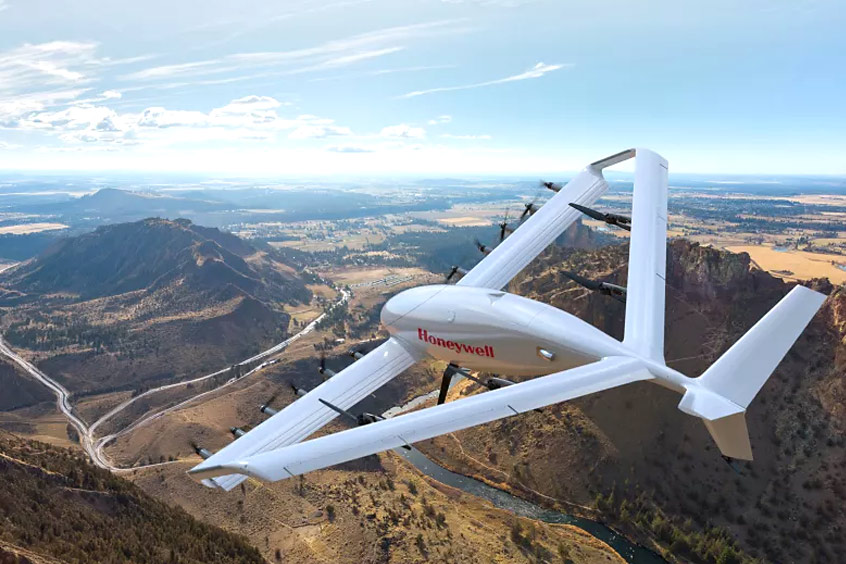
The integrated system creates a mid-layer defence capability, extending protection across wide areas while reducing dependence on high-cost kinetic responses.
Honeywell has partnered with Odys Aviation to develop an airborne counter-drone capability designed to protect critical infrastructure and strategic assets from evolving unmanned threats. The combined system aligns with US efforts to strengthen domestic advanced aviation capability and accelerate deployment of locally built drone technologies.
Positioned between ground-based sensors and missile defence systems, the Laila-SAMURAI pairing introduces a new defensive layer that extends coverage across large and remote areas while reducing reliance on costly kinetic interception methods. The capability is particularly suited to distributed energy assets including refineries, pipelines and offshore platforms.
“SAMURAI delivers critical counter-UAS capabilities with proven reliability, scalability and seamless integration into existing defense architectures. By leveraging Honeywell’s long history in avionics, sensors and defense systems, we are enabling C-UAS capabilities that protect farther, respond faster and operate with minimal downtime,” says Matt Milas, president, Defense and Space, Honeywell Aerospace.
“Drone threats have fundamentally changed the economics and operational requirements of air defense,” says James Dorris, CEO of Odys Aviation. “Critical infrastructure and forward-operating locations require persistent protection across large areas and the ability to engage threats at the horizon long before they're at the doorstep. By combining Honeywell’s SAMURAI system with the endurance, runway independence and onboard power capability of Laila, we're introducing a new airborne defense layer designed for today and into the future.”
Laila will act as the first airborne platform for SAMURAI. Its hybrid propulsion system, compatible with Jet A, Jet A-1 and JP-8 fuels, enables up to eight hours of endurance and a range of 450 miles, allowing rapid deployment without dedicated charging infrastructure.
SAMURAI’s modular architecture, built on model-based systems engineering principles, supports integration of customer-selected sensors and effectors while maintaining interoperability and lifecycle visibility.
Where we hold a LinkedIn profile it’s marked — the links come with a subscription.
The week’s aerospace manufacturing news, reported by our editors and delivered free to your inbox. Sign up ›
Subscribers see the confirmed supply chain behind every story — complete supplier lists for each aircraft program, sector and company. See the plans ›
Corrections go straight to the editorial team that maintains this directory.