
Aircraft program
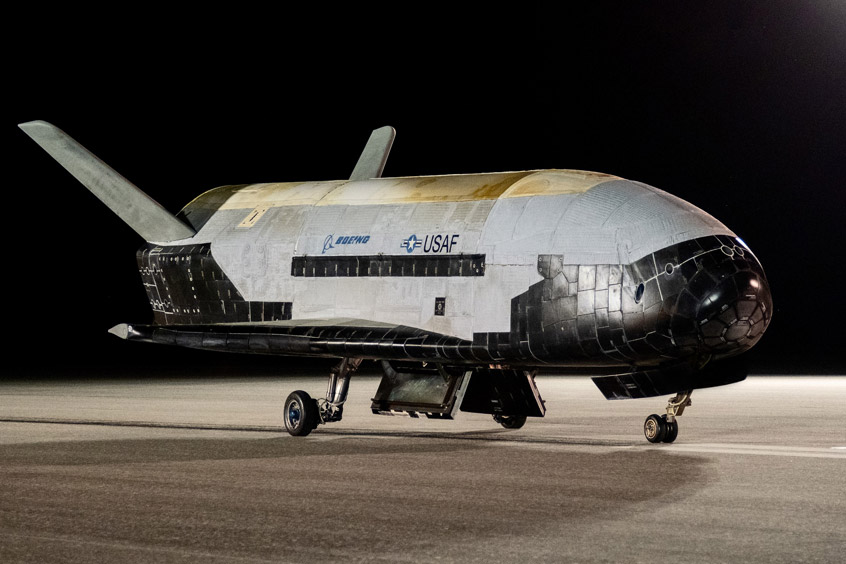
Low-earth orbit, unmanned, reusable spacecraft used to demonstrate reusable space advancements, requires launch vehicle to exit atmosphere then can re-enter and land as a spaceplane (upon re-entry, vehicle is capable of Mach 25). DARPA involvement reflects potential military applications.
The aircraft as engineered: what it is built from, the systems it flies with, and its configuration — each box a theme.
Technical reference compiled with AI research; a value appears only where two independent research passes and a web fact-check agree. Gaps are deliberate.
Supplier geography and market analysis for this program — with an Analytics subscription.
Subscribe| Variant | Launch / first flight | Production end | Notes |
|---|---|---|---|
| NASA/Boeing X-40A | / 1998 | 2001 | Space Maneuver Vehicle, 80%-90% subscale variant to assist X-37A testing, towed aloft by UH-60/CH-47D. |
| NASA/DARPA X-37A | 1999 / 2006 | 2010 | Test glider vehicle launched with Scaled Composites' WhiteKnight, glide testing only (spaceflight not achieved), NASA transferred development to DARPA in 2004 then DARPA transferred to U.S. Air Force Rapid Capabilities Office (RCO) (current project overseer). Formerly known as Future-X Pathfinder. |
| Boeing X-37B | 2006 / 2010 | Orbital Test Vehicle, launched primarily with Atlas V or Falcon 9 rockets (spaceflight achieved), and once with a Falcon Heavy rocket. | |
| Boeing X-37C | 2011 / | Theorised 165-180% scaled-up variant, with capacity for up to six astronauts. |
| Boeing Defense, Space & Security | News | X-37B variant |
The program’s dated history — milestones, contracts, supplier selections and facilities, each linked to its source. Log in to view.
Information on this page is compiled from a variety of published sources; links do not necessarily imply recommendation or confirmation by the airframe manufacturer.
Corrections go straight to the editorial team that maintains this directory.