
Press release
17/12/2024
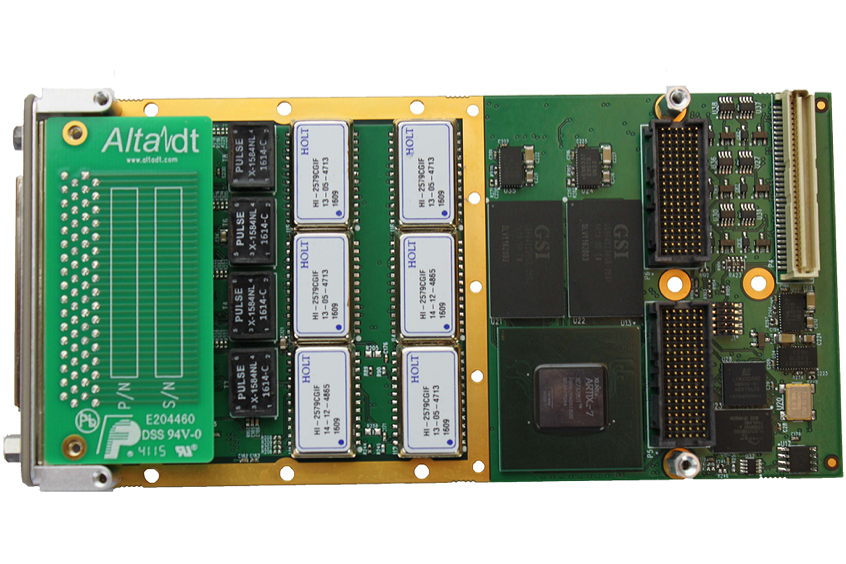
Alta Data Technologies (Alta), a provider of avionics interface solutions, announces the release of its new multi-protocol XMC interface card, the XMC-MAS. This card provides a comprehensive solution for avionics systems by integrating MIL-STD-1553, ARINC, and asynchronous serial (RS-232/422/485) interfaces on a single board.
This combination of protocols, including support for serial interfaces commonly used for many devices including MIL-STD-188 radios, makes the XMC-MAS well-suited for use in cargo aircraft, helicopters, and other air and land vehicles where space and weight are critical factors. The XMC-MAS is available in commercial, extended temperature, and conduction-cooled versions.
The XMC-MAS offers a range of features for avionics applications. It provides 1-2 channels of MIL-STD-1553A/B, optional 4 ARINC channels, and 4 channels of asynchronous serial RS-232/422/485, addressing diverse communication needs. The four-lane VITA XMC form factor optimizes functionality while minimizing size and power requirements. The card includes Alta’s AltaAPI SDK, supporting a wide range of operating systems to simplify integration. Integrated trigger, clock, and IRIG-B decoder enhance operational capabilities and simplify system development.
"The XMC-MAS is a game-changer for our customers," said Harry Wild, VP of Sales at Alta. "By consolidating avionics interfaces like 1553, ARINC, and serial onto a single card, we are reducing size and weight, which is essential for platforms like cargo aircraft, helicopters, and ground vehicles. This integration simplifies system design and opens up new possibilities for avionics applications, from cargo handling and flight control to navigation, communication, and sensor integration."
Send releases and photographs to news@news.airframer.com — the pick of them reach Bulletin readers every Thursday.
The week’s aerospace manufacturing news, reported by our editors and delivered free to your inbox. Sign up ›
Subscribers see the confirmed supply chain behind every story — complete supplier lists for each aircraft program, sector and company. See the plans ›
Corrections go straight to the editorial team that maintains this directory.