
Press release
19/11/2026
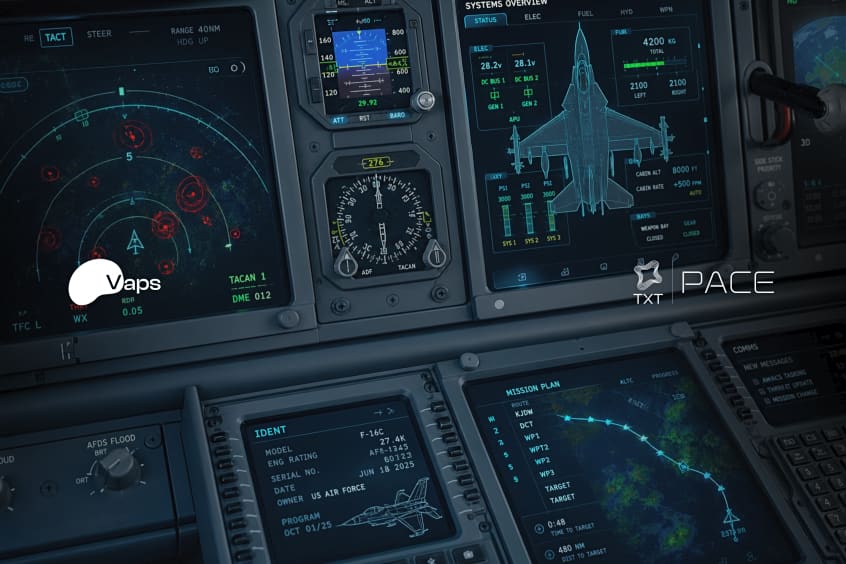
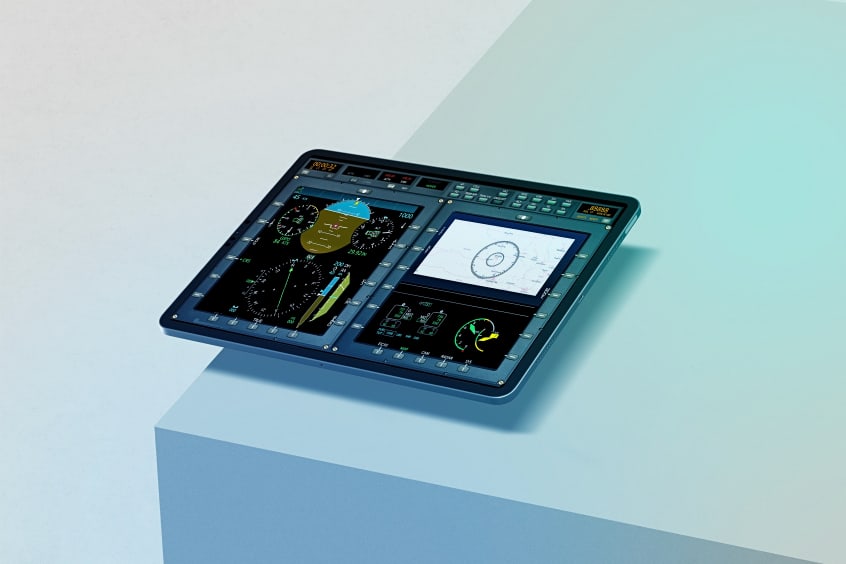
DDC-I, a leading supplier of software and professional services for mission- and safety-critical applications, today announced that it has teamed with PACE Aerospace Engineering & Information Technology GmbH to deliver a DAL A certifiable, safety-critical software rendering solution for avionics displays that requires no hardware GPU. The GPU-less solution, utilizing the PACE VAPS Software Renderer (VSR) and Deos RTOS, reduces cost, accelerates development and simplifies certification for safety-critical avionics applications. It eliminates not only the need for a hardware GPU, but also the accompanying GPU driver and graphics stack.
"Advanced multi-core processors make software rendering a real option for the large majority of avionics display applications," said Gary Gilliland, Vice President of Marketing at DDC-I. "With PACE VSR running atop Deos, avionics designers now have a native, portable, multi-core rendering capability that can be developed, certified and deployed without a hardware GPU in a fraction of the time and cost. Eliminating the GPU also simplifies the safety verification, as there is no GPU driver code and the GPU timing effects can be difficult to bound from a determinism and interference perspective."
"Deos provides a certifiable, safety-critical multi-core platform for deploying our DAL A software rendering technology in embedded avionics systems," said Andrea Bassi, Head of HMI & Embedded Graphics at PACE. "HMI development teams can continue designing their HMIs in VAPS XT and deploy them on Deos without the need for a hardware GPU. Together, our DAL A software renderer and Deos enable deterministic, high-performance graphics while simplifying certification, eliminating GPU dependencies, and enhancing portability, security, and system reliability."
VSR allows HMI developers to deploy graphics-based systems to embedded hardware when GPU usage is not available, not needed, or certification of the GPU would be too complex. VSR is integrated with the VAPS XT HMI development environment, which facilitates rapid HMI prototyping, design and development using an optimised graphics library. Though VSR is primarily intended for 2D applications, VAPS XT implementations can be readily upgraded to support hardware-based GPU rendering where more advanced multimedia functionality is required.
Avionics applications running VSR on Deos access display capabilities using calls in much the same way they would with a hardware GPU. Instead of dispatching those calls to a GPU driver to execute those functions on a hardware GPU, the application renderer on the microprocessor executes the graphics primitives and writes the results to the frame buffer.
Deos makes it easy for developers to distribute rendering tasks across multiple cores and separate the software graphics engine from the primary application, all the while leveraging advanced Deos capabilities like cache partitioning and slack partitioning that boost performance while ensuring safety criticality. Deos also features a display simulation environment that allows for virtual display prototyping, which is useful during both the development and verification phases.
About Deos
Deos is employed in commercial and military ground, marine, air, and space systems where reliability and determinism are paramount. Rooted initially in avionics, Deos was first certified to DO-178 DAL A (the utmost software process standard) in 1998 and is deployed in over 10,000 commercial aircraft. Deos' use cases have extended outside avionics, where its proven technical features provide numerous advantages over legacy RTOS architectures, especially as integrated system complexity continues to grow while still requiring a high degree of determinism and robustness. Deos is also aligned with modern military initiatives such as FACE, MOSA, PYRAMID, and others.
Deos is a safety-critical embedded RTOS that employs patented cache partitioning, memory pools, and safe scheduling to deliver higher CPU utilisation than any other certifiable safety-critical COTS RTOS while also addressing AC/AMC 20-193 multi-core objectives. The Deos environment also offers security features, middleware, networking, and other components often desired for modern embedded systems.
Where we hold a LinkedIn profile it’s marked — the links come with a subscription.
Send releases and photographs to news@news.airframer.com — the pick of them reach Bulletin readers every Thursday.
The week’s aerospace manufacturing news, reported by our editors and delivered free to your inbox. Sign up ›
Subscribers see the confirmed supply chain behind every story — complete supplier lists for each aircraft program, sector and company. See the plans ›
Corrections go straight to the editorial team that maintains this directory.