

Airframer news
26/10/2023
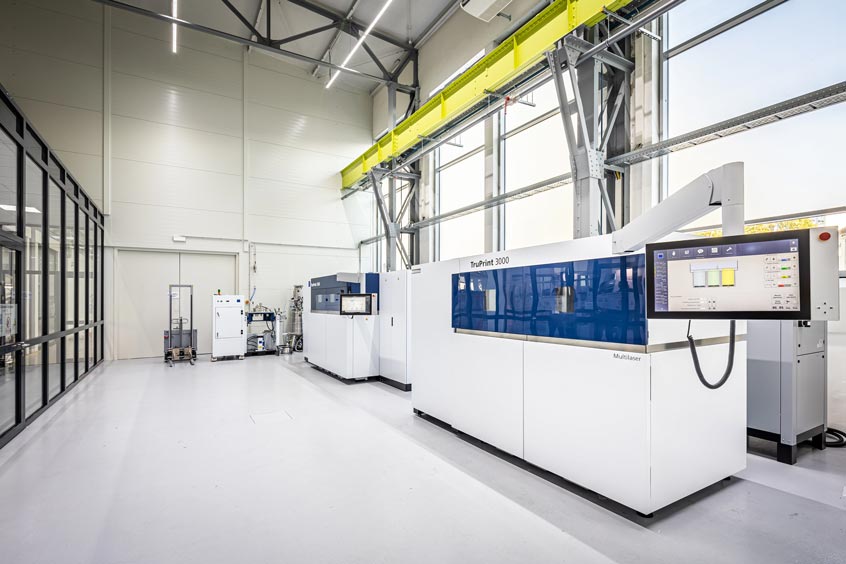
Airbus Helicopters uses 3D printers from TRUMPF to manufacture structural components made of titanium and high-strength aluminum. These will be its rotary products and to the A320 and A350 aircraft amongst others.
Airbus Helicopters is using 3D printers from TRUMPF to manufacture components for its helicopters and for aircraft from the parent company Airbus. Airbus Helicopters is expanding its additive manufacturing capabilities with a new 3D printing center in Donauwörth, Germany.
TRUMPF is supplying the machines for metal 3D printing. "With innovative manufacturing processes, we are working on the helicopters of the future in Donauwörth. Among other things, 3D printing helps reduce the weight of components," says Helmut Färber, Site Manager of Airbus Helicopters in Donauwörth. Airbus Helicopters will use the 3D printing process to produce components for the electric-powered CityAirbus, the experimental high-speed Racer helicopter and the Airbus A350 and A320 passenger aircraft, among others.
"With its manufacturing know-how, TRUMPF is a reliable partner to the aviation industry worldwide. Our 3D printing systems are a key technology on the path to sustainable flying and they reduce dependency on long supply chains," says Richard Bannmüller, CEO TRUMPF Laser and System Technology. Additive manufacturing allows entire assemblies to be printed as one component, saving weight while ensuring the components are stable and meet the strict safety requirements of the aviation industry.
Airbus Helicopters uses 3D printers from TRUMPF to manufacture structural components made of titanium and high-strength aluminum. "Additive manufacturing saves expensive raw material and can lower production costs in the aviation industry. 3D printers only use the material that designers actually need for their components and that ends up taking off in the aircraft," says Bannmüller. 3D printing users can also reuse unused metal powder. Conventional manufacturing processes, on the other hand, require up to ten times more raw material than the final product. Therefore, when milling or chipping, much of the raw material ends up being waste.