
Aircraft program
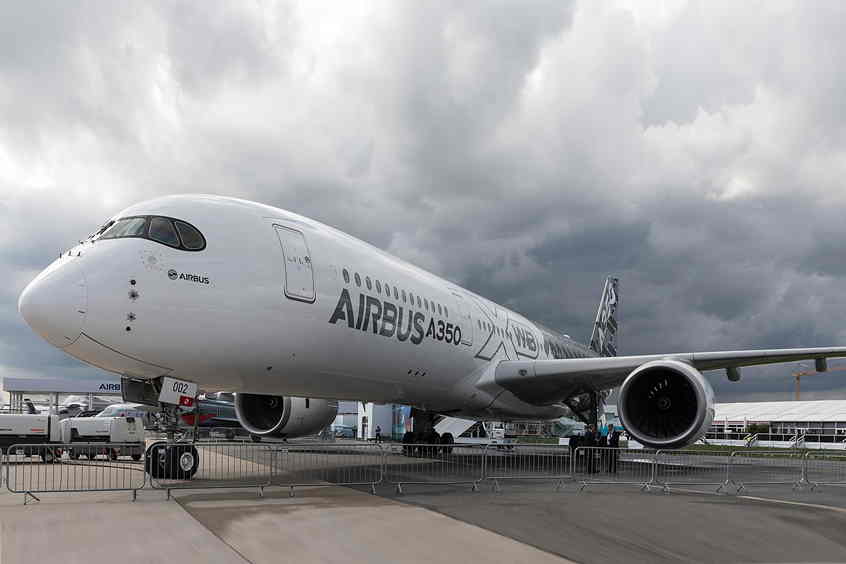
A family of long range, extra wide body airliners. Final assembly in Toulouse, France.
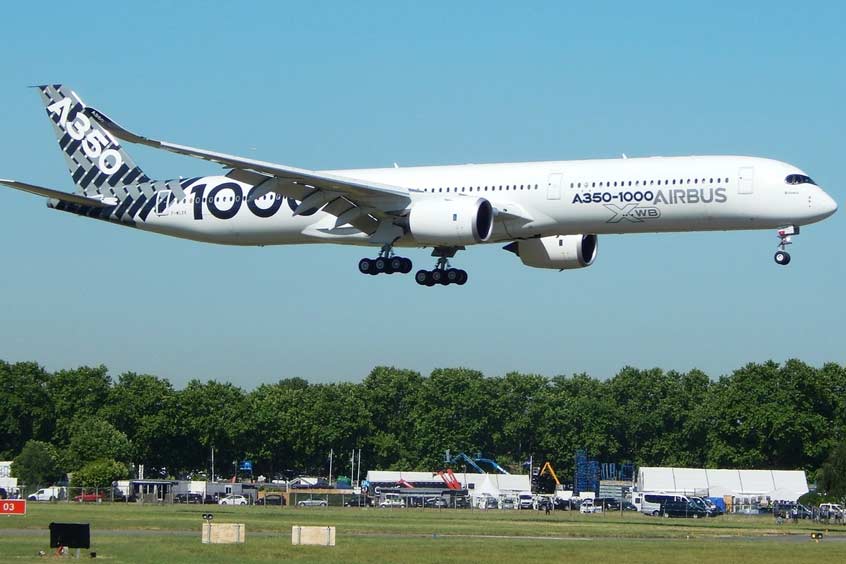
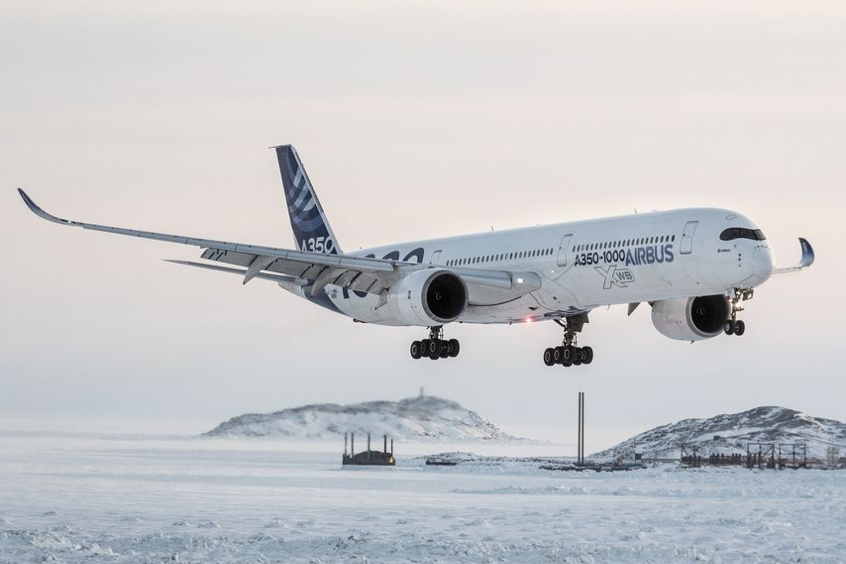
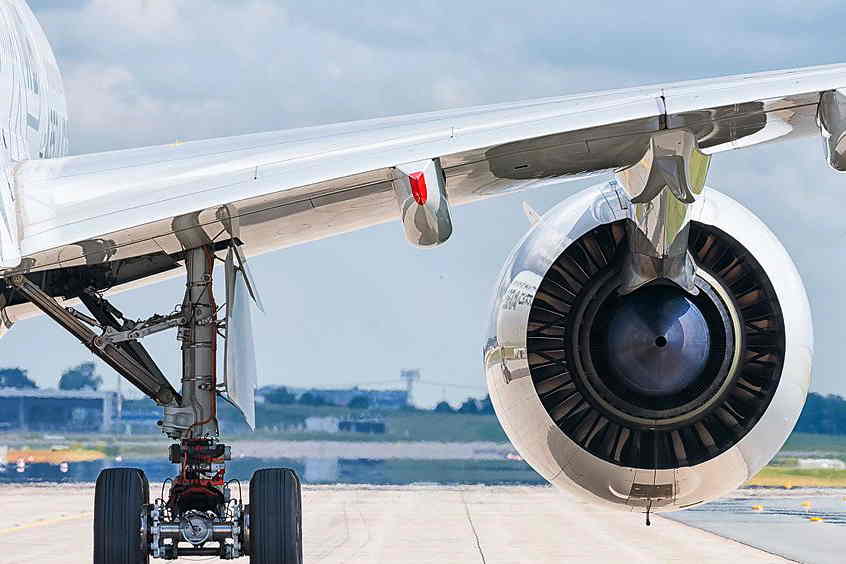
Designed to increase aerodynamics and lower fuel burn and CO2 emissions, the light aircraft is made from 53% (-900) 54% (-1000) composites - outer and centre wing-box, fuselage and empennage; 19% aluminium alloy - ribs, floor beams and gear bay; and 14% titanium - landing gears, pylons and attachments. Over 1000 3D printed parts. Powered by twin Rolls-Royce Trent XWB turbofan engines developed for fuel efficiency and low noise level. An adaptive design for the 64m flexible wings feature upwardly curving wingtips and blended winglets, enhancing the aerodynamics of the aircraft. The A350-1000 has a longer fuselage and six-wheel landing gear (Safran Landing Systems) compared to four-wheels (Goodrich) on the A350-900.
Cabin space is maximised with a wide, ovoid fuselage (5.59m cross-section), bigger windows and increased head room. The Honeywell air management system maintains a 20% humidity atmosphere. Fly-by-wire flight controls are comprised of three primary and three secondary flight control computers. The aircraft is fitted with Moog primary flight control actuators, Liebherr slat actuators and Collins Aerospace horizontal tall trim actuators.
Two pilots in a fixed glazed glass cockpit facing 6 screen configuration, Honeywell flight management system and Thales avionics suite including head-up display. 8 cabin crew have optional rest area above main passenger cabin.
The aircraft as engineered: what it is built from, the systems it flies with, and its configuration — each box a theme.
Notable technologies — each tag names a technology on our research record for this aircraft, with its fitting status: Primary, Standard, Option or Planned.
Technical reference compiled with AI research; a value appears only where two independent research passes and a web fact-check agree. Gaps are deliberate.
Supplier geography and market analysis for this program — with an Analytics subscription.
Subscribe| Variant | Launch / first flight | Production end | Notes |
|---|---|---|---|
| Airbus A350-900 | 2006 / 2013 | Production: 57 (2025) GAMA: Airbus A350. Baseline variant, typically 314 passengers, and ultra long-range A350-900ULR, typically 173 passengers. | |
| Airbus A350-1000 | 2006 / 2016 | Stretched variant also known as A350 XWB, typically 369 passengers (maximum 440). | |
| Airbus A350F | 2021 / 2026 | Freighter variant with extended fuselage compared to A350-900 and a payload capability of 109t. |
| Airbus S.A.S. | News |
The program’s dated history — milestones, contracts, supplier selections and facilities, each linked to its source. Log in to view.
Information on this page is compiled from a variety of published sources; links do not necessarily imply recommendation or confirmation by the airframe manufacturer.
Corrections go straight to the editorial team that maintains this directory.