PRESS RELEASE
Issued by: New Avionics Corporation
New Avionics Corporation here announces the availability of the first in-flight ice sensor made entirely of plastic.
New Model 9732-PLASTIC ice detecting transducer probe solves the problem of conductive metallic interference with mission-critical radio antennas on unmanned aerial vehicles and other small aircraft. The sensor is transparent to radio frequencies.
The sensor body consists entirely of Delrin and Acrylic plastics. The only metal in the entire sensor assembly is in the necessary wires to connect it to its host system.
The elimination of all metal parts was the primary objective that New Avionics faced as the firm undertook to develop this new ice sensor for small general aviation aircraft, using commercial off-the-shelf technology. All prior existing features and benefits of the original Model 9732-OEM optical sensor, fabricated of type 316L marine- grade stainless steel, are retained in the new plastic Model 9732-PLASTIC.
RF transparency and the elimination of all metal parts is necessitated by a requirement to locate and install the sensor in close proximity to mission-critical GPS and other types of radio antennas.
Model 9732-PLASTIC can be installed virtually anywhere on an aircraft fuselage, at any angle of attack, raked forward or aft. The only requirement is that the air gap be located beyond the aircraft's airflow boundary layer.
The sensor measures a mere 11½2 inches long by 1½4 inch diameter. It weighs less than 10 grams. It features the industry's most-sensitive ice detection threshold of 0.001 inch of ice or better. This sensitivity immediately alerts pilots to the aircraft's presence in an icing domain, and allows them to take early corrective action, long before ice builds to become any kind of hazard to aircraft in flight.
Model 9732-PLASTIC provides common 5/16-inch-24 mounting threads, and an attachment flange that accommodates any ordinary 7/16-inch open-end wrench. The length of the connection link from the sensor probe to the host electrical system is user- defined, and can be specified anywhere from an inch to 200 feet or more. See the photo below; ask the factory.
Model 9732-PLASTIC works as an optical spectrometer. It has no moving parts. It is completely solid, and suitable for use in pressurized aircraft. Its few internal parts are assembled with optical two-part epoxy, and it is physically robust in all six axes.
Operational videos are available of tests conducted at NASA Glenn in Cleveland Ohio, the world's largest icing wind tunnel. They document that Model 9732 operates in conformance with core paragraph 5.2.1.1.1 of SAE aerospace standard AS 5498 in lieu of any published FAA Technical Standard Order for in-flight icing detectors. Model 9732 is also listed in paragraph 4.11 of SAE aerospace information report AIR 4367A.
| Contact details from our directory: | |
| New Avionics Corporation | Ice Detectors |
| Related directory sectors: |
| Warning Systems |
| Air Data & Flight Instruments |

Weekly news by email:
See the latest Bulletin, and sign up free‑of‑charge for future editions.
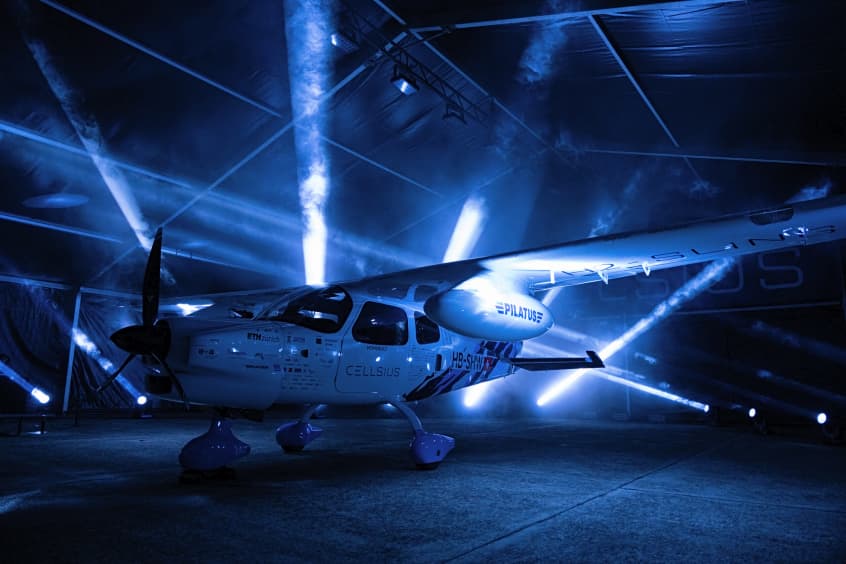
H2-Sling hydrogen aircraft readies for flight

Heart’s X1 becomes largest battery-powered aircraft flown

North Wind commences build of hypersonic testing facility