PRESS RELEASE
Issued by: DLR - German Aerospace Center
The first German state institute for aeronautics research was founded 110 years ago in Gottingen. It was the precursor of the present-day German Aerospace Center (Deutsches Zentrum fur Luft- und Raumfahrt; DLR), and laid the foundations for modern aeronautics.
When the first airships and aeroplanes took to the air at the beginning of the 20th century, there were frequent unexplained problems and crashes. Certain shapes and constructions flew better than others. But why? Objects moving through the air seemed to be affected by unknown influences. Ludwig Prandtl, appointed as Director of Technical Physics at the University of Gottingen in 1904, wanted answers. And so in November 1907, at Prandtl's instigation, the Gottingen Model Testing Institute was established to carry out aerodynamic experiments. "This was the first national institute for aeronautics research in Germany," says Jessika Wichner, Head of the DLR Central Archive. "At the beginning of the 20th century in Gottingen, the theoretical and experimental foundations were laid without which present-day aviation would not be possible."
The quest for the perfect shape
One of the things that the new research establishment looked into in its early years was the development of the best shape for an airship. Ludwig Prandtl is acknowledged worldwide as the 'father of aerodynamics' for his research into the scientific principles underlying boundary layer theory and aerofoil theory.
After the First World War, the Model Testing Institute became the Gottingen Aerodynamic Experimental Station (AVA), one of DLR's three predecessor organisations. "Gottingen was a magnet for the pioneers of aeronautics research across the globe," says Wichner. Among those who worked there were the Hungarian scientist Theodore von Karman, who would become one of the foremost aerodynamics experts in the USA, and Hans Pabst von Ohain, inventor of the first jet engine.
The primary focus of the work has remained the same: the scientific quest for perfect flight and travel conditions – whether for aircraft, spacecraft or high-speed trains.
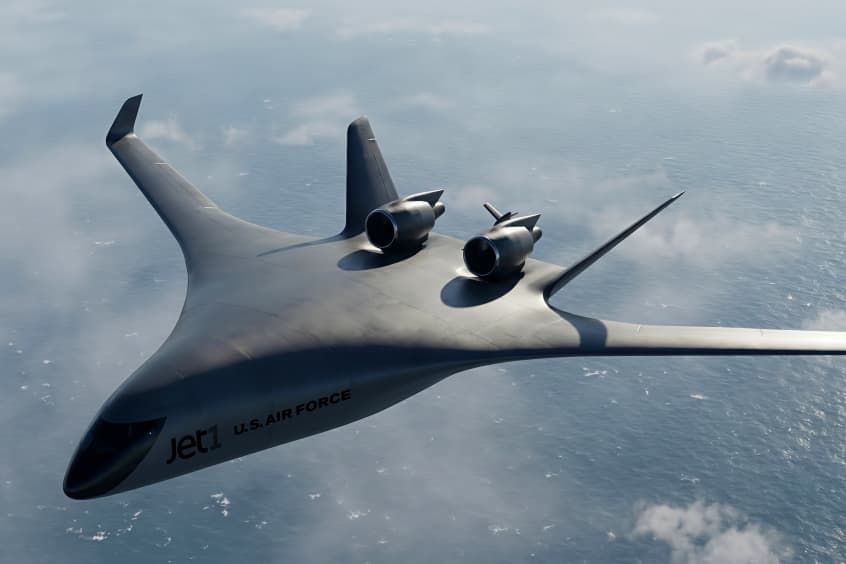
In 1907, Prandtl developed the 'Gottingen-type' wind tunnel that, unlike the wind tunnels commonly used at that time, consisted of a completely closed circular system; most modern wind tunnels are now based on it. Such revolutionary designs as the flying wing and the rotor ship were tested in Gottingen-type wind tunnels. A flying wing is an aircraft with no tailplane and no differentiation between wing and fuselage. Models designed by the Horten brothers were tested in Gottingen before and after the Second World War. Today, this design is considered to have been the inspiration for the American B2 stealth bomber and the next generation of civilian wide-bodied aircraft.
Rotor ships were being developed in Gottingen as early as the 1920s. They were driven by a rotating cylinder – an idea that did not catch on, but which has been taken up again in recent years in the E-Ship 1 An invention as simple as it was groundbreaking was the swept wing, now standard in almost all modern aircraft. Without the swept wing, modern fast cruising flight would not be possible.
Today, 480 of DLR's 8000 staff members work at the DLR site in Gottingen.
| Contact details from our directory: | |
| DLR - German Aerospace Center | Fuel Cells, Testing Services, Research/Consulting Services, Composite Design Consultants, Flight Simulators, Instrument Landing Systems, Prototyping, Airframer, Vibration Testing |
| Related directory sectors: |
| Test Services |
| Design |
| Aircraft Operations |

Weekly news by email:
See the latest Bulletin, and sign up free‑of‑charge for future editions.
HAL and Safran finalise Aravalli engine deal
JetZero raises $100m as Z4 nears flight test
Bombardier acquires MHI Canada Aerospace assets