PRESS RELEASE
Issued by: Vulcanair SpA
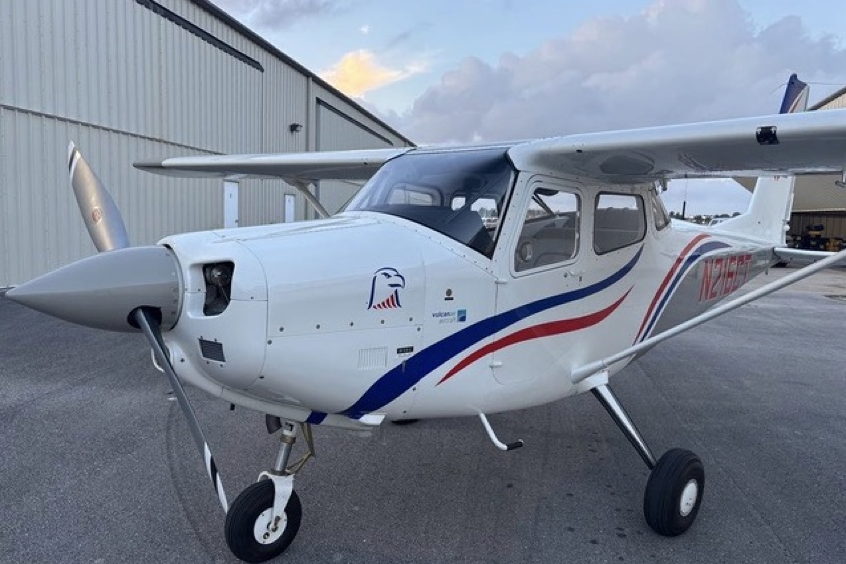
Vulcanair Aircraft recently displayed the latest evolution of its four-seat V1 trainer at Sun 'n Fun, a design that incorporates nearly 200 improvements tailored specifically for the U.S. market. These enhancements and more will be integrated into the first production aircraft manufactured at Vulcanair Aircraft North America's new factory in Elizabethtown, North Carolina, which is scheduled to open in September 2025.
The V1 Trainer has a long and proven heritage. Originally developed as the Partenavia Oscar, the aircraft was first certified in the 1970s and became widely used in Europe and Africa, known for its rugged reliability, ease of maintenance, and versatility. In 1998, Vulcanair of Naples, Italy, acquired the type design, refining and updating the aircraft before achieving FAA certification in 2017. Since then, the V1 has continued to evolve, and with these latest refinements, it's now more capable than ever
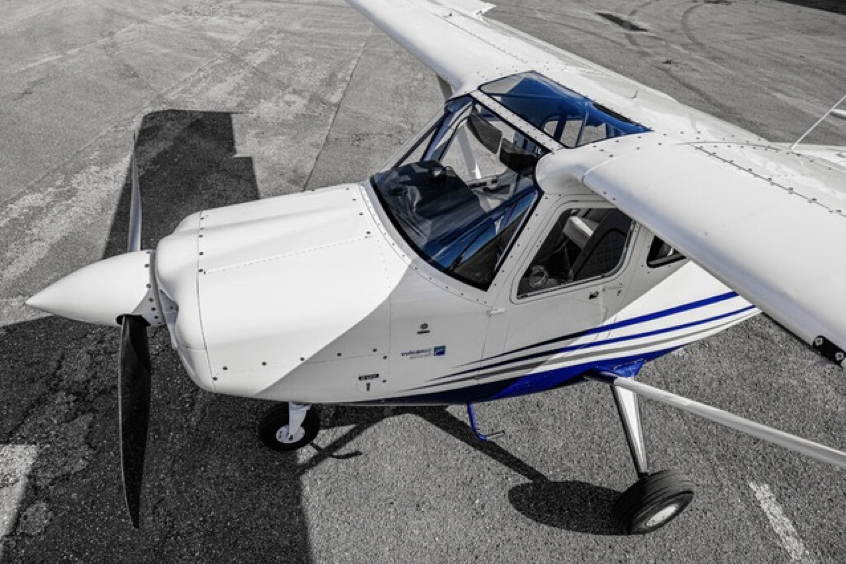
The newest version features an improved door design that now includes an openable window, built-in chart pockets, and cupholders for added convenience. A redesigned engine cowling enhances cooling performance, ensuring optimal efficiency in demanding flight training environments. The cockpit has been modernized with an updated instrument panel, now equipped with Garmin touchscreen glass avionics, and soon a Garmin digital autopilot, bringing cutting-edge technology to the training market. Retaining its reputation for durability, the aircraft continues to feature a tubular aluminum roll cage providing outstanding occupant protection and pushrod flight controls for precise handling. With its stabilator tail design, the V1 delivers smooth and responsive control throughout all phases of flight, with a big and beefy trim wheel that is ideal for the flight training environment
The aircraft is powered by the proven 180-horsepower Lycoming IO-360 engine, which is capable of running on both 100LL avgas and unleaded alternative fuels. A 50-gallon fuel capacity allows for extended training flights, while the aircraft's three-door configuration makes it easy for students and instructors to enter and exit, as well as providing convenient access to the rear seats. Constructed from all-metal materials, the V1 is built to withstand the demands of high-utilization flight schools, ensuring long-term durability and cost-effective operations.
Vulcanair's commitment to continuous improvement extends beyond the current round of updates. Future enhancements will include an optional three-bladed climb propeller for improved performance in high-density altitude conditions, vortex generators for enhanced aerodynamic efficiency, and optional DeltaHawk jet-fuel-burning engine that will provide an alternative powerplant option for operators looking to transition away from avgas.
With a maximum cruise speed of 128 knots, a range of 530 nautical miles, and a useful load of 864 pounds, the V1 remains a competitive and cost-effective choice for flight training. Designed with simplicity and reliability in mind, its systems are easy to maintain, minimizing downtime and maximizing operational efficiency for flight schools. The new North Carolina production facility will mark a major milestone for Vulcanair in the U.S. market, ensuring world-class support, faster deliveries, and a strong domestic presence for years to come.
"The V1 is already an exceptional trainer, and these latest refinements make it even better,” said Chris Benaiges, CEO of Vulcanair Aircraft North America. “The opening of our U.S. production facility is an important step forward, allowing us to build and support the aircraft right here in North America. The V1 is built to last, easy to maintain, and now more capable than ever.""
| Contact details from our directory: | |
| Vulcanair SpA | Airframer |
| Vulcanair Aircraft North America | Final Assembly |
| Related aircraft programs: |
| Vulcanair V1 |

Weekly news by email:
See the latest Bulletin, and sign up free‑of‑charge for future editions.
Textron and Merlin unveil pilot-optional SkyCourier concept

G2E consortium wins 18-month GCAP electronics contract
GE advances XA102 adaptive cycle engine