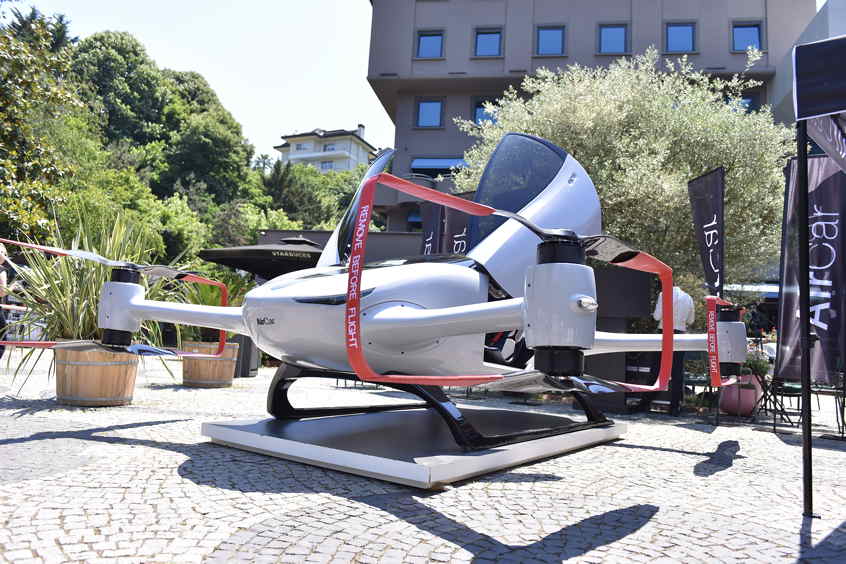
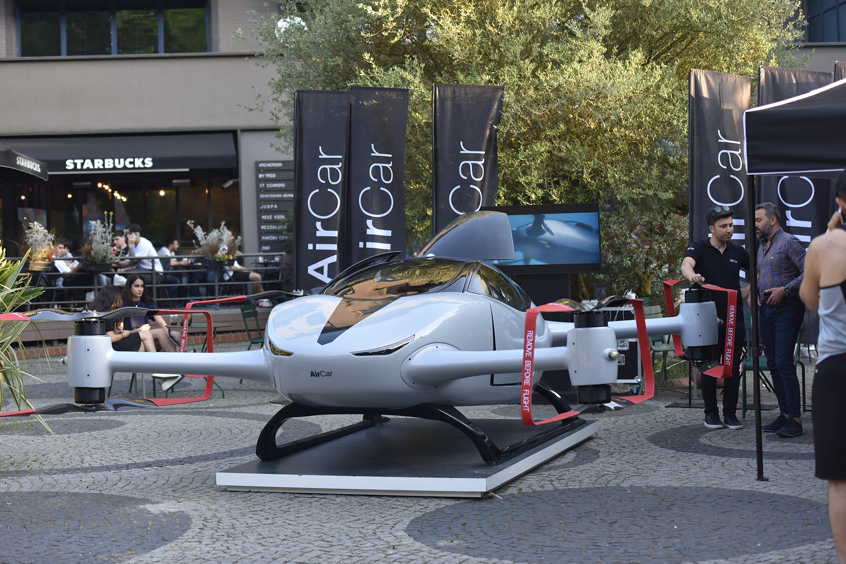
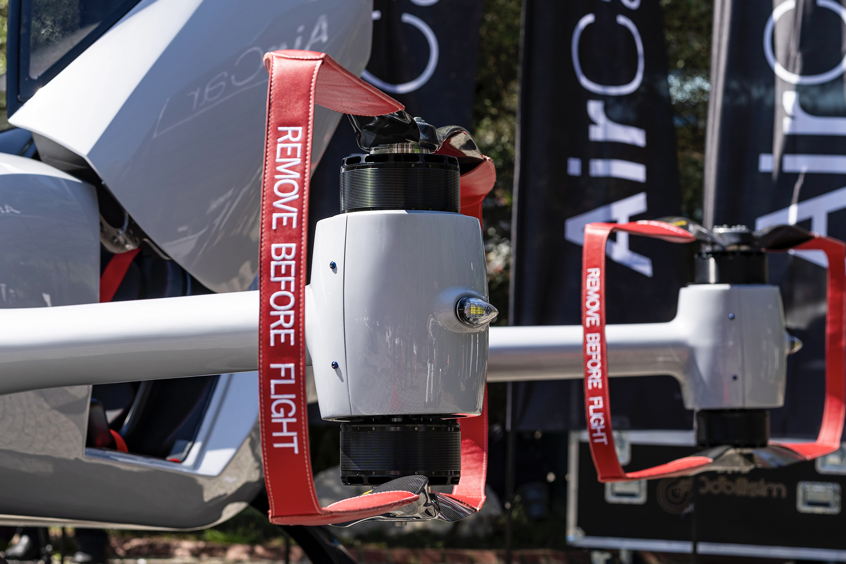
AirCar, Turkey’s first electric flying car startup, has taken a major step in urban air mobility. Since 2020, the company has been conducting R&D at Bilişim Vadisi and has successfully completed piloted test flights with its single- and two-seater flying car models, developed with 85% local components. This milestone marks not only a turning point for the company, but also the beginning of a new era for Turkey’s aviation and mobility ecosystem.
A Historic Milestone in Piloted Flight
On April 5, 2025, at Bilişim Vadisi, AirCar founder and CEO Eray Altunbozar piloted the single-seater prototype himself, taking off from the test center and landing at the helipad where the two-seater model was stationed. He then proceeded to fly the two-seater vehicle, successfully completing the manned flight test.
The challenging test took place under winds exceeding 35 km/h, lasted approximately 10 minutes, and was completed at an altitude of 8 meters in accordance with safety protocols. Speaking after the test, Altunbozar emphasized that this was not only a technical milestone but also part of a broader vision for the future of urban mobility.
“This flight is a concrete step toward the future of urban transportation,” said Altunbozar. “With AirCar, flying cars are no longer science fiction. They’re becoming reality—and it’s happening in Turkey. Our next step is to establish a production facility and begin mass production. As of today, we’re one of only five companies in the world to have conducted a manned flight with a two-seater flying car.”
Advanced Technology for Quiet and Sustainable Transport
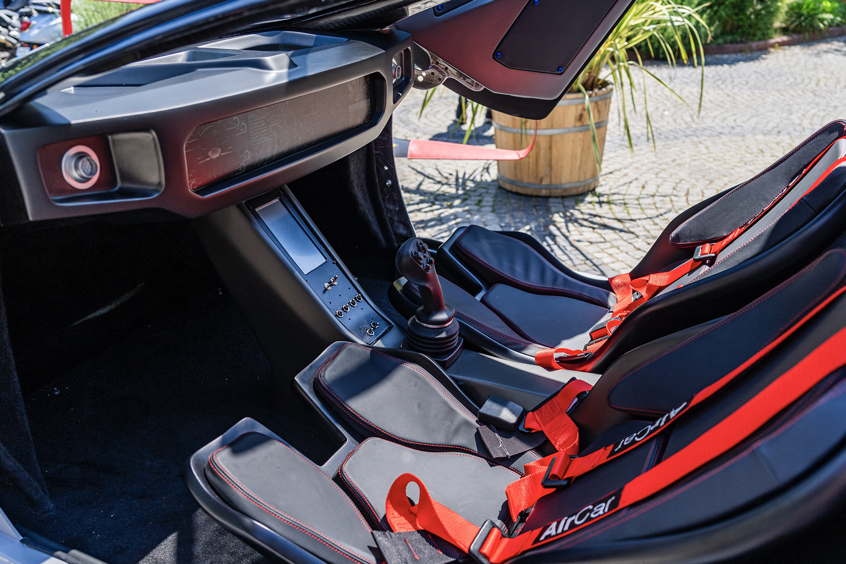
AirCar’s two-seater model is specially developed for shared and autonomous air transportation. It features:
- A range of 50–80 km on a single charge
- 200 kg payload capacity
- Noise levels five times lower than helicopters
- Low operating costs
- High safety design with 8 electric motors
5-Minute Travel Between Maslak and Kadıköy
Beyond personal purchase and use, AirCar’s two-seater is also being developed for use as an autonomous air taxi. With AirCar Ports planned across cities, it will enable fast, safe, and comfortable point-to-point flights. In Istanbul, AirCar aims to reduce travel time between any two points to an average of 10 minutes. Highlighting the revolutionary potential for daily life, Altunbozar said:
“AirCar won’t just get you where you’re going faster—it will make possible things we can’t even imagine right now. Like having lunch with a friend on the other side of the city during your break, or landing in the middle of a forest for a workout in nature.”
Single-Seater Model Aims for Mass Production by Year-End
The single-seater model is receiving significant interest in the U.S. and Europe, especially for recreational and training purposes. AirCar plans to ready the vehicle for mass production by the end of the year and begin setting up its pilot manufacturing facility.
Moving Forward with Strategic Partners
AirCar is supported by globally respected institutions like TÜBİTAK and the European Institute of Innovation and Technology (EIT). Under the Ministry of Industry and Technology’s 2030 Strategic Roadmap, R&D and infrastructure for eVTOL and autonomous technologies will be increasingly supported in Turkey, accelerating AirCar’s progress.
| Contact details from our directory: | |
| AirCar | Airframer |
| Related aircraft programs: |
| AirCar |

Weekly news by email:
See the latest Bulletin, and sign up free‑of‑charge for future editions.
H2-Sling hydrogen aircraft readies for flight
Heart’s X1 becomes largest battery-powered aircraft flown

North Wind commences build of hypersonic testing facility