PRESS RELEASE
Issued by: GE Aerospace Research
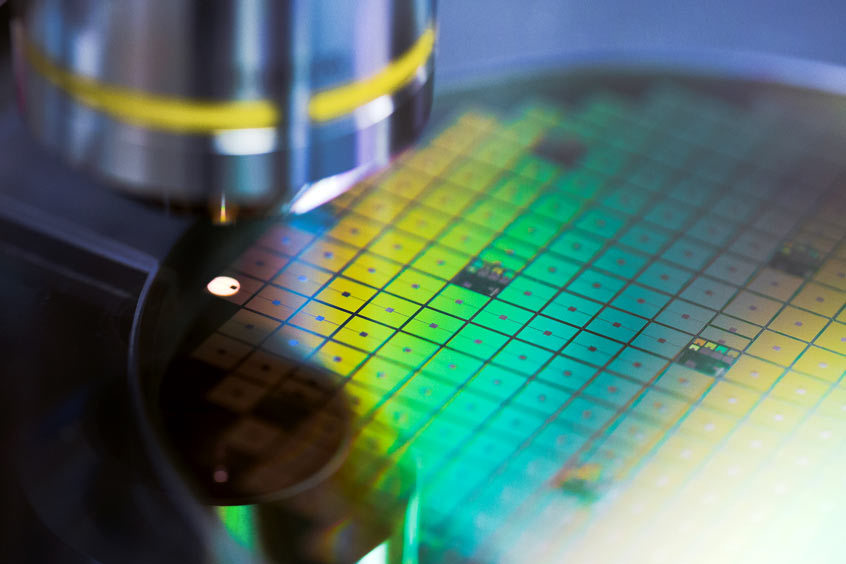
Photo: GE Aerospace
GE Aerospace Silicon Carbide Power Device
Today, GE Aerospace announced the successful demonstration of fourth generation of Silicon carbide (SiC) power MOSFET (metal-oxide-semiconductor-field-effect transistors) chips at the company's Research Center in Niskayuna, NY that will improve switching speed, efficiency, and durability.
Available in a 5mm X 5 mm chip size, this latest generation of SiC power devices delivers 1200V and 11mΩ, with an industry leading temperature rating of 200°C. As industries are adopting advanced semiconductor technologies for hybrid- and battery-electric vehicle (HEV and BEV) platforms and more efficient power solutions, these advanced power devices will deliver a step change in efficiency and power density to meet the growing demand for energy and power.
“Our newest Gen-4 SiC MOSFETs deliver a step change in performance that makes them very attractive across a wide range of industries, including automotive, renewables, AI data centers, and industrial electrical power,” said Kris Shepherd, president & GM, Electrical Power Systems for GE Aerospace. These industries have an opportunity to realize significant gains in efficiency, reliability and power density across all these applications.”
Why this matters
As demand for energy soars with the growth of AI data centers and more hybrid electric and electric power applications in the aerospace, automotive, and energy sectors, GE Aerospace's Gen-4 SiC MOSFETs can deliver more efficient and power dense solutions for improved performance. SiC has succeeded silicon as the clear power semiconductor material of choice, packing higher power density and switching speed. Additionally, GE Aerospace's SiC MOSFETs offer industry-leading 200°C temperature rating and durability, which are built upon two decades of sustained R&D, extensive IP portfolio, and application expertise focused on the aerospace sector.
The higher power density, temperature rating, and switching speed of GE Aerospace's Gen-4 SiC MOSFETs would offer significant performance enhancements to systems used today, ranging from high speed/Formula 1 racing cars to AI data centers. Many high-speed racing cars utilize electric machine with traction inverter as part of kinetic energy recovery system. Similar to HEVs, these systems can convert kinetic to electrochemical energy during braking, which in turn can be quickly released to provide acceleration surge. With AI data centers, higher voltage SiC MOSFETs enable streamlined power architecture, resulting in significantly lower power losses and smaller power conversion footprint.
GE Aerospace already sells SiC-enabled electric power generation, distribution and conversion solutions through our Electrical Power business to support aerospace, marine, and ground-based platforms.
GE Aerospace is also actively exploring new collaborations in the automotive sector as well as data center industry that's supporting the growth of AI.
| Contact details from our directory: | |
| GE Aerospace Research | Design Services, Research/Consulting Services |
| Related directory sectors: |
| Design |

Weekly news by email:
See the latest Bulletin, and sign up free‑of‑charge for future editions.
CubCrafters secures EASA approval for 215 HP XCub

Airbus expands Belfast wing plant ahead of A220 production increase
GKN displays UAV demonstrator and engine