Photo:
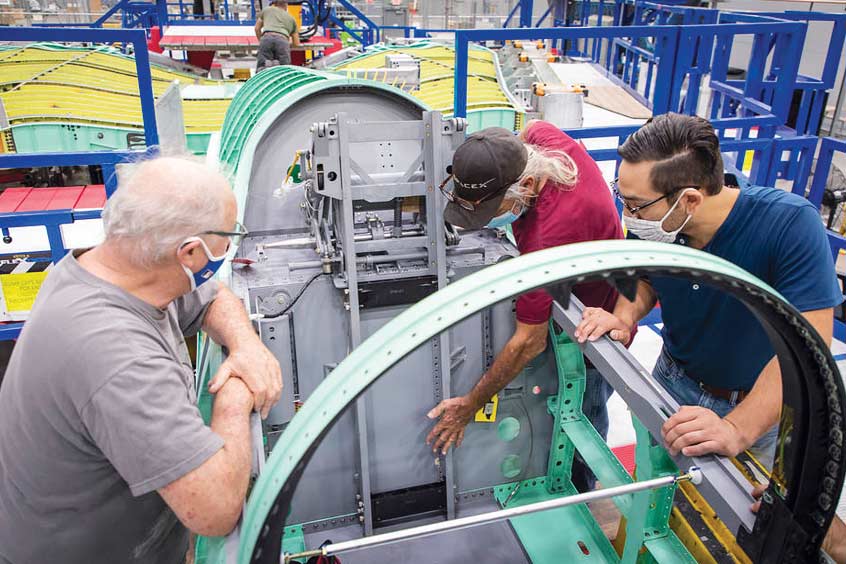
The cockpit of the X-59 at Lockheed Martin’s Skunk Works factory in Palmdale.
Technicians at Lockheed Martin’s Skunk Works factory in Palmdale, California have turned their attention to the cockpit section of NASA’s X-59 Quiet SuperSonic Technology research aircraft.
In this newly-released photograph the camera is looking toward the rear of the aircraft. The yellow-green metal are the wing’s internal structural ribs, while the gray metal in the foreground marks the cockpit’s interior. An ejection seat from a retired NASA T-38 training jet will eventually be installed in the cockpit along with the airplane’s avionics – including the eXternal Vision System.
Lockheed Martin is assembling the experimental aircraft for NASA in anticipation of its first flight some time in mid-2022. Designed to produce quiet sonic “thumps” when flying supersonic, the X-59 will be flown over select communities to measure public perception of the sound. Results will be given to regulators to use in determining new rules that could allow commercial faster-than-sound air travel over land.
Assembly of the X-59 is continuing during 2020 and is reported to be making good progress, despite challenges such as those imposed by the unexpected global pandemic.
| Contact details from our directory: | |
| NASA Langley Research Center | Research/Consulting Services, Testing Services, Wind Tunnels |
| Lockheed Martin Skunk Works | Airframer |
| Related aircraft programs: |
| Lockheed Martin Skunk Works X-59 QueSST |

Weekly news by email:
See the latest Bulletin, and sign up free‑of‑charge for future editions.
HAL and Safran finalise Aravalli engine deal
JetZero raises $100m as Z4 nears flight test
Bombardier acquires MHI Canada Aerospace assets