Photo:
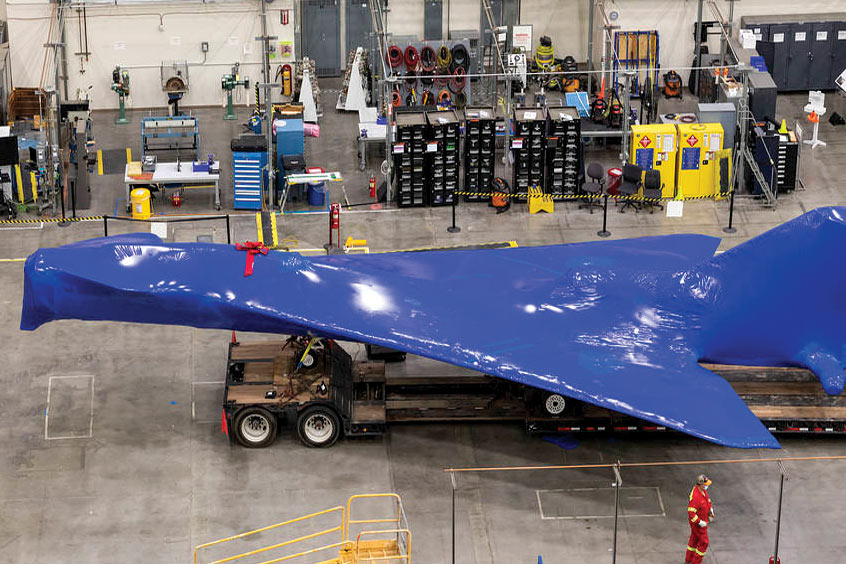
NASA’s X-59 Quiet SuperSonic Technology aircraft (QueSST) is pictured here at Lockheed Martin Skunk Works in California, wrapped up in preparation for its move to Texas.
2021 saw significant milestones achieved in the assembly of NASA's X-59 Quiet SuperSonic Technology aircraft (QueSST), and all eyes now look forward to a pivotal 2022. Following the X-plane's temporary move from Lockheed Martin's Skunk Works in California to their facilities in Texas, the X-59 is set to start 2022 with critical ground testing, as progress continues toward NASA's target of the aircraft's first flight later this year.
While in Texas, ground testing of the X-59 will be done to ensure the aircraft can withstand the loads and stresses that typically occur during flight. The team will also calibrate and test the fuel systems before the X-59 makes the journey back to California for more tests and completion.
The X-59 is designed to reduce the loudness of the sonic boom, which occurs when an aircraft flies faster than the speed of sound, to a gentle, quiet sonic "thump". The X-plane will demonstrate this in flights over communities around the U.S. starting in 2024, as NASA collects data that could open the future to commercial supersonic flights over land.
| Contact details from our directory: | |
| NASA Armstrong Flight Research Center | Research/Consulting Services, Testing Services, Vibration Testing |
| Lockheed Martin Skunk Works | Airframer |
| Related aircraft programs: |
| Lockheed Martin Skunk Works X-59 QueSST |
| Related directory sectors: |
| Test Services |

Weekly news by email:
See the latest Bulletin, and sign up free‑of‑charge for future editions.
Textron and Merlin unveil pilot-optional SkyCourier concept

G2E consortium wins 18-month GCAP electronics contract
GE advances XA102 adaptive cycle engine