Photo: DLR (CC BY-NC-ND 3.0)
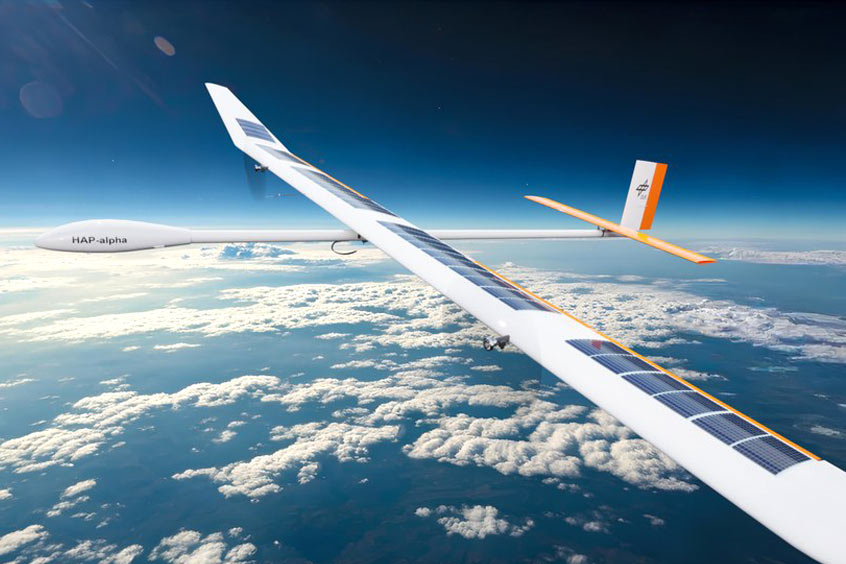
HAP-alpha will fly at around 20 kilometres in the lower stratosphere.
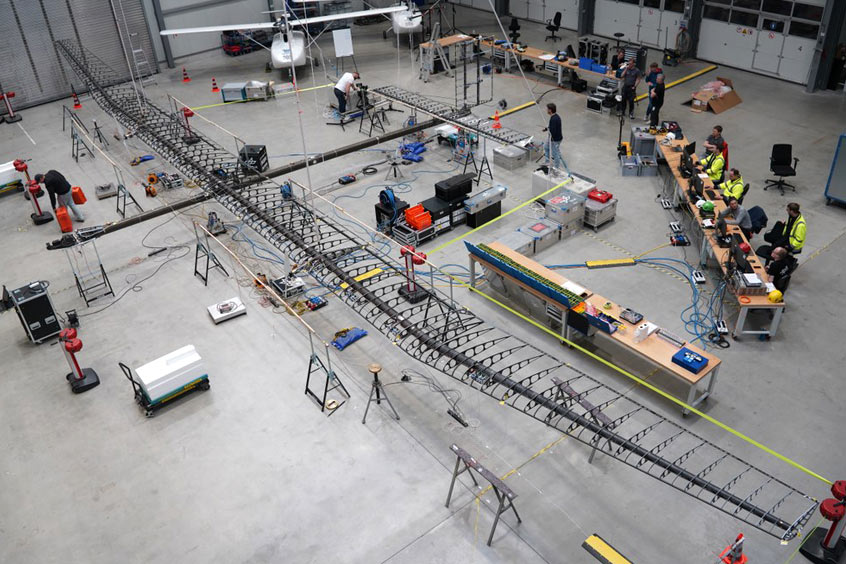
Photo: DLR
HAP-alpha during the Ground Vibration Test.
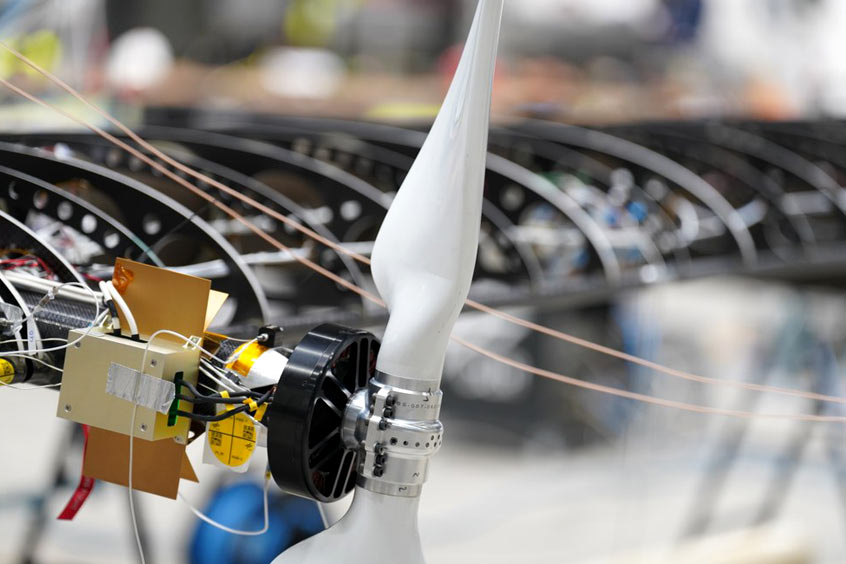
Photo: DLR (CC BY-NC-ND 3.0)
An electric motor on the wing of HAP-alpha, equipped with acceleration sensors.
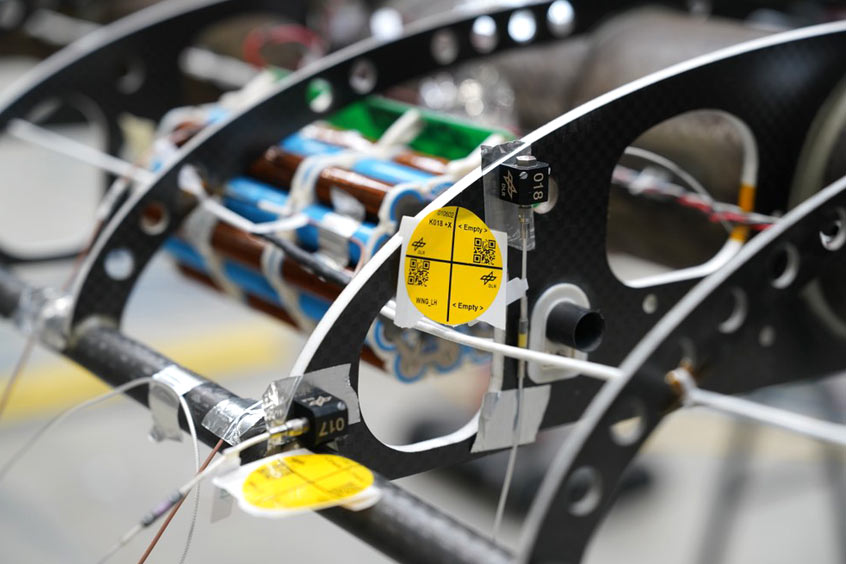
Photo: DLR (CC BY-NC-ND 3.0)
Accelerometers on the wing ribs of HAP-alpha.
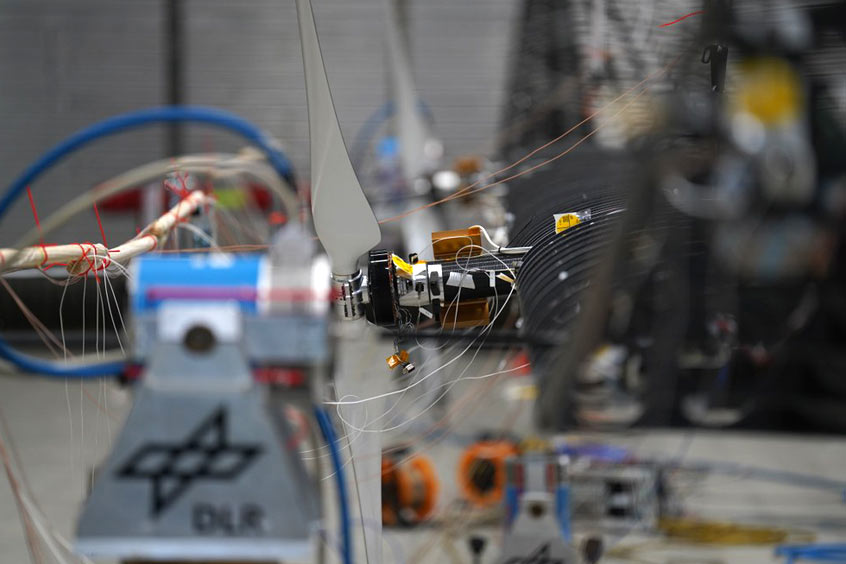
Photo: DLR (CC BY-NC-ND 3.0)
A vibration exciter in use during a test run on the wing.
High-altitude solar aircraft HAP-alpha has completed its Ground Vibration Test, a key milestone in flight readiness, at DLR’s National Experimental Test Center in Cochstedt. Developed by the German Aerospace Center (DLR), the lightweight 138-kilogram platform with a 27-metre wingspan is designed to operate in the lower stratosphere and will undergo its first low-altitude flight in 2026, subject to weather.
DLR Executive Board Member for Aeronautics Markus Fischer says: “With HAP-alpha, DLR is demonstrating its comprehensive systems expertise in the complete design, development and operation of a new and innovative aircraft, incorporating all disciplines.”
Julian Sinske of the DLR Institute of Aeroelasticity adds: “The successful Ground Vibration Test is a significant step in the development of our high-altitude platform. It shows that we are on the right track to overcoming complex aeroelastic challenges and preparing the platform for flight.”
Sensor systems recorded dynamic properties as electromechanical vibrators triggered structural responses. The collected data will refine simulation models to better predict flight behaviour under turbulence and manoeuvres. HAP project lead Florian Nikodem of the DLR Institute of Flight Systems says: “It shows that we are on the right track to overcoming complex aeroelastic challenges and preparing the platform for flight.”
HAP-alpha will also act as a testbed for two onboard sensor systems, a high-resolution MACS-HAP camera and HAPSAR radar, aimed at long-term Earth observation and communications tasks.
| Contact details from our directory: | |
| DLR - German Aerospace Center | Airframer, Cameras (Airborne), Composite Design Consultants, Flight Simulators, Fuel Cells, Instrument Landing Systems, Prototyping, Reconnaissance Radar, Research/Consulting Services, Testing Services, Vibration Testing |
| Related aircraft programs: |
| DLR HAP-alpha |

Weekly news by email:
See the latest Bulletin, and sign up free‑of‑charge for future editions.
Textron and Merlin unveil pilot-optional SkyCourier concept

G2E consortium wins 18-month GCAP electronics contract
GE advances XA102 adaptive cycle engine