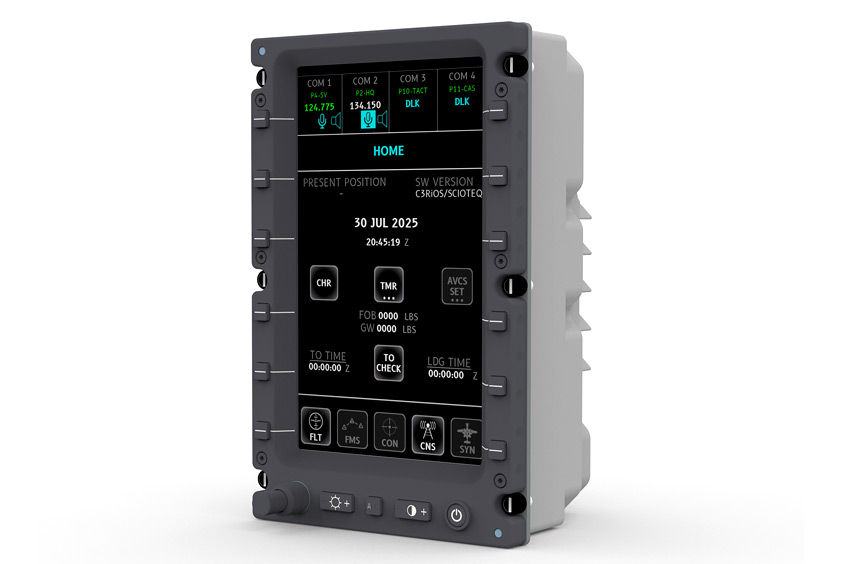
Photo: ScioTeq
The touchscreen RDU-4047 allows pilots to manage key flight systems from a single, intuitive interface.
Lockheed Martin has selected ScioTeq’s rugged RDU-4047 high performance display for integration into its vertical lift Airborne Mission Systems offerings. The move supports the development of fully integrated, open-systems digital cockpit solutions designed to improve operational efficiency and mission readiness.
The RDU-4047 acts as a central control interface, allowing pilots to manage flight and mission systems from a single touchscreen. It provides access to the flight management system, assists with inertial reference system initialisation, manages datalink interfaces and performance data and helps streamline flight planning.
“We’re proud Lockheed Martin has chosen ScioTeq to help shape the future of vertical lift aviation. The RDU-4047 reflects our commitment to delivering advanced, mission-ready display technologies that enhance pilot performance and operational efficiency,” says Rob Gibbs, CEO of ScioTeq.
The display’s active-matrix LCD module supports real-time visuals and essential sensor feeds, ensuring situational awareness and precision decision-making. Its high-resolution screen and low-latency video processing are optimised for both rotary- and fixed-wing platforms.
“The integration of ScioTeq’s Touchscreen Control Display Unit into Lockheed Martin’s open-systems safety-critical infrastructure supports our vision for next-generation, mission-ready aircraft,” adds Steve Donlin, Lockheed Martin Airborne Mission Systems director. “Together, we’re helping our customers redefine what’s possible in future vertical lift.”
| Contact details from our directory: | |
| ScioTeq | Electronic Flight Instrument Systems, Flight Management Systems, LCD Displays, Moving Maps, Onboard Computers |
| Lockheed Martin Corporation | |
| Related directory sectors: |
| Cockpit Displays |

Weekly news by email:
See the latest Bulletin, and sign up free‑of‑charge for future editions.
Textron and Merlin unveil pilot-optional SkyCourier concept

G2E consortium wins 18-month GCAP electronics contract
GE advances XA102 adaptive cycle engine