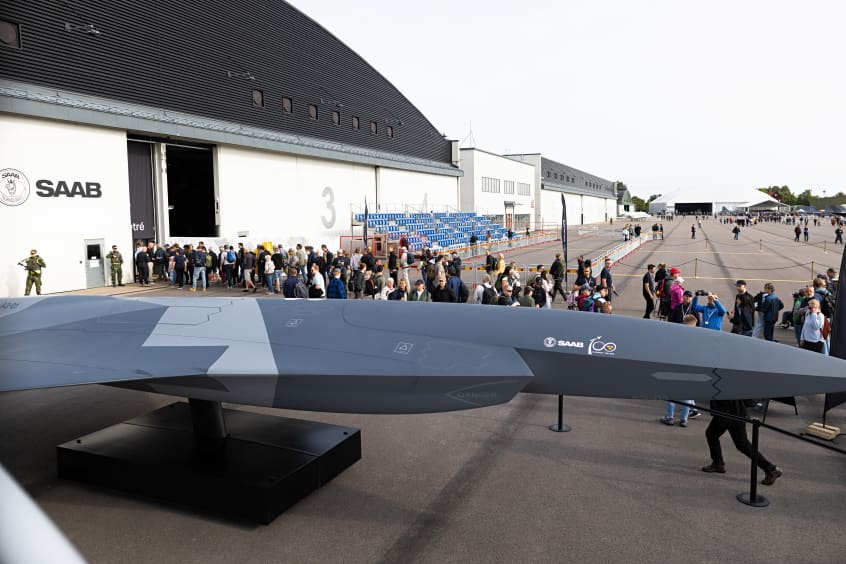
A research group from Embry-Riddle Aeronautical University is collaborating with the U.S. Department of Energy’s Argonne National Laboratory to address the challenges in making light but super-strong structures.
Together they will build a compact device that mimics the extreme environment of hypersonic flight. It will operate alongside the upgraded Advanced Photon Source (APS), a DOE Office of Science user facility at Argonne, which now provides the brightest synchrotron X-ray beam in the world. The device and X-rays will work together to capture real-time changes in hypersonic materials under stress.
“Recreating the environment of hypersonic flight can be complicated,” says Seetha Raghavan, professor of aerospace engineering and co-principal investigator. “There are so many factors and no perfect way to test them all. High enthalpy wind tunnels... use a lot of energy resources and are limited in access.”
Beamline scientist Victoria Cooley adds: “Brighter X-rays allow us to probe deep into materials... These two pieces come together to make world-changing projects such as this one possible.”
The findings may pave the way for military and civilian aircraft materials that are durable, cost-effective and suitable for cargo delivery vehicles.
| Contact details from our directory: | |
| Embry-Riddle Aeronautical University | Academic Institutions, Research/Consulting Services |
| Related directory sectors: |
| Design |

Weekly news by email:
See the latest Bulletin, and sign up free‑of‑charge for future editions.
CubCrafters secures EASA approval for 215 HP XCub

Airbus expands Belfast wing plant ahead of A220 production increase
GKN displays UAV demonstrator and engine