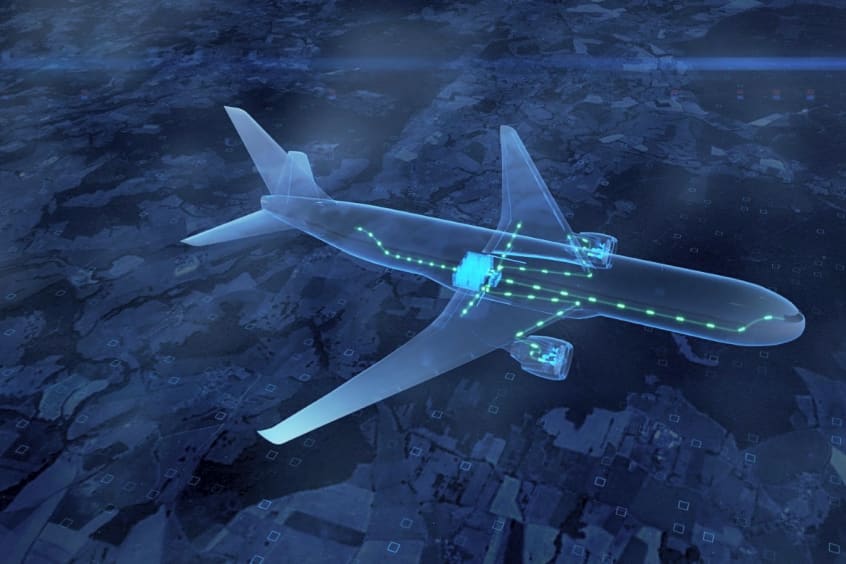
Photo: Airbus SAS 2026
Airbus is integrating scalable motor/generators, electronic controllers and power distribution equipment for the demonstrator.
Airbus has launched LEIA, the Large Scale Integration Demonstrator of Hybrid Electrical Architecture, working with partners across the European Union, the UK and the US to develop high-voltage generation and distribution systems for short-to-medium range aircraft. The project is supported by the European Union Clean Aviation Joint Undertaking and aims to bridge component-level innovation with aircraft-level maturity, preparing the technologies for future integration and certification.
LEIA builds on the completed SWITCH project, which focused on hybrid-electric powertrain subsystems. Collins Aerospace finished integrated laboratory testing in July, working alongside Pratt & Whitney, GKN Aerospace and MTU Aero Engines. Those subsystems, developed to operate alongside simulated aircraft and engine systems, are transitioning to the Airbus Sustainable Technology and Engineering Projects laboratory in Ottobrunn, Germany, where teams will carry out aircraft-level integration testing covering design, battery interfacing and energy-management systems.
Karim Mokaddem, head of aircraft of tomorrow research and technology at Airbus, says: "Our progress in developing hybrid-electric technologies and our move into the LEIA demonstrator marks a pivotal shift in how we design the future of flight." He adds: "By moving to integrated, intelligent hybrid-electric architectures, we are actively laying the physical and digital foundation for the next generation of aircraft."
Airbus is integrating a suite of electrical components for the demonstrator, including scalable motor/generators, next-generation electronic controllers and power distribution equipment, alongside other aircraft systems. The components will go through a testing programme culminating in a ground demonstration by 2027. LEIA and SWITCH form part of Airbus' wider work across Clean Aviation projects targeting electrification for regional and short-to-medium range aircraft, with the aim of reducing greenhouse gas emissions from aviation. Partners on LEIA include AVL, Collins Aerospace, the European Aerospace Science Network, Fraunhofer-Gesellschaft, Liebherr Aerospace, Lynxeo, the Netherlands Aerospace Centre, Safran, SAFT, the University of Warwick and Wroclaw University of Science and Technology.
| Contact details from our directory: | |
| Airbus S.A.S. | Airframer |
| Collins Aerospace | |
| Pratt & Whitney | |
| GKN Aerospace | |
| MTU Aero Engines | Additive Manufacturing, Blisks, Combustion Test Services, Compressors, Engine Parts, Final Assembly, Fuel Cells, Turbine Engine Blades, Turbine Engine Starters, Turbine Engine Vanes |
| Airbus Central Research & Technology (was Airbus Group Innovations) | Electric Batteries, Project Management, Research/Consulting Services, Technical/Eng/Scientific Studies |
| AVL Mobility Technologies, Inc. | CIM Software, Computational Fluid Dynamics, Computer-aided Analysis, Computer-aided Design, Lithium-ion Batteries, Test Equipment |
| Liebherr-Aerospace Toulouse | Air Conditioning Equipment, Air Cycle Machines, Avionics Heat Exchangers, Bleed Air Systems, Cabin Pressure Control Systems, Cooling Systems, Flap/Slat Mechanisms, Ice Protection/Prevention Equipment, Inverters, Oil Coolers, Test Stands, Valves |
| NLR - Royal Netherlands Aerospace Centre | Research/Consulting Services, Technical/Eng/Scientific Studies |
| Safran Group | |
| Saft | Lead Acid Batteries (Wet & Dry), Lithium-ion Batteries, Nickel-Cadmium Batteries, Silver-Oxide Zinc Batteries |
| Related directory sectors: |
| Electric Propulsion |

Weekly news by email:
See the latest Bulletin, and sign up free‑of‑charge for future editions.
Albany will continue manufacturing 787 fuselage frames
Pratt & Whitney invests $25 million in Poland
GE Aerospace buys Cleveland-based castings maker CPP
B-N completes first Islander assembled in UK from component level