
Aircraft program
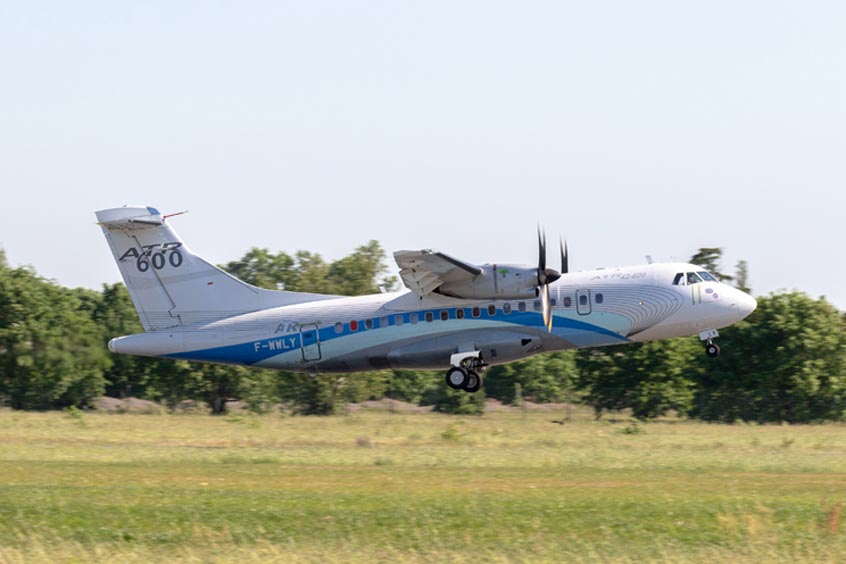
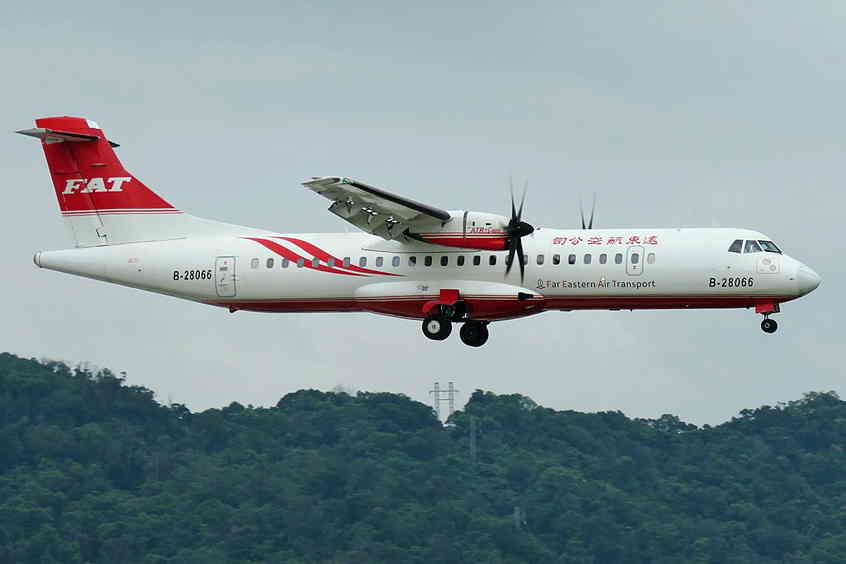
A family of twin turboprop regional airliners available as both passenger (42-78 passengers) and freighter. The 72 (72 seater) is a stretched version of the 42 (42 seats) and have in common the same fuselage cross sections, systems, engines, 6-blade propellers and cockpit.
The fuselage is made from light metal alloy, high, tapered wings from aluminium alloy and spars of 6 blade propeller from metal. Approximately 19% of the weight of the aircraft is composite materials including Kevlar/Nomex, CFRP/Nomex, GFRP/Nomex and GFRP/polyeurathane sandwiches which are used for the fin, t-type tail, wing/body fairings and skin panels, rudders and elevators, engine cowlings, nose wheel doors and main landing gear firings. The ATR 72 models are slightly lighter than the ATR 42 with an all composites tail assembly, CFRP spars on engine nacelles and light alloy ribs. Main landing gear is pannier mounted.
Standard configurations have no Auxiliary Power Unit (APU) instead using a propeller brake. Forward door used for cargo and baggage, rear door for passengers.
Crew of two plus single folding seat in a full glass cockpit face avionics suite (Thales) comprising 5 LCD displays 2 EFIS displays, 2 multifunction displays and 1 engine and warning display.
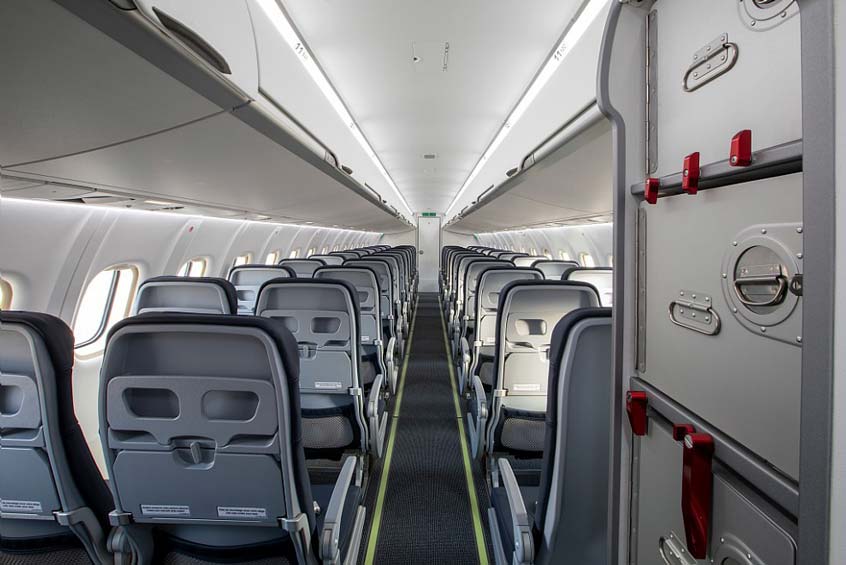
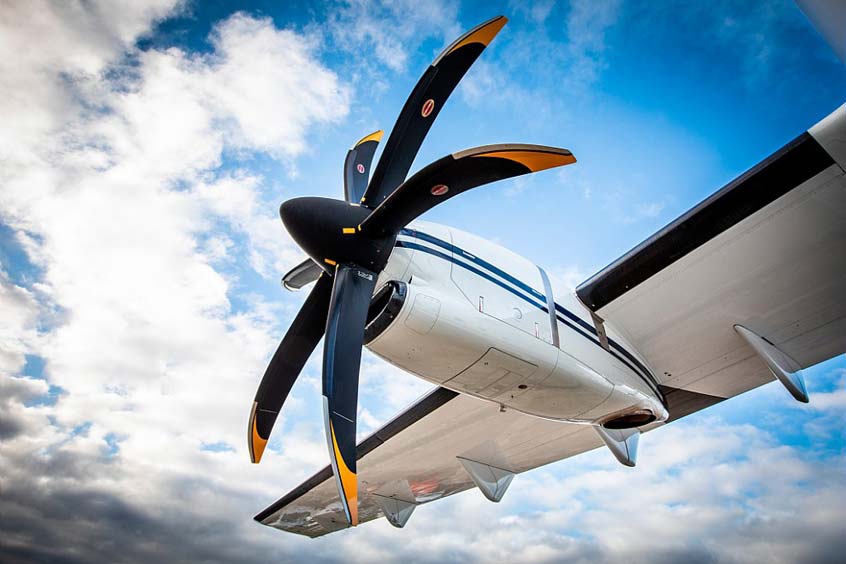
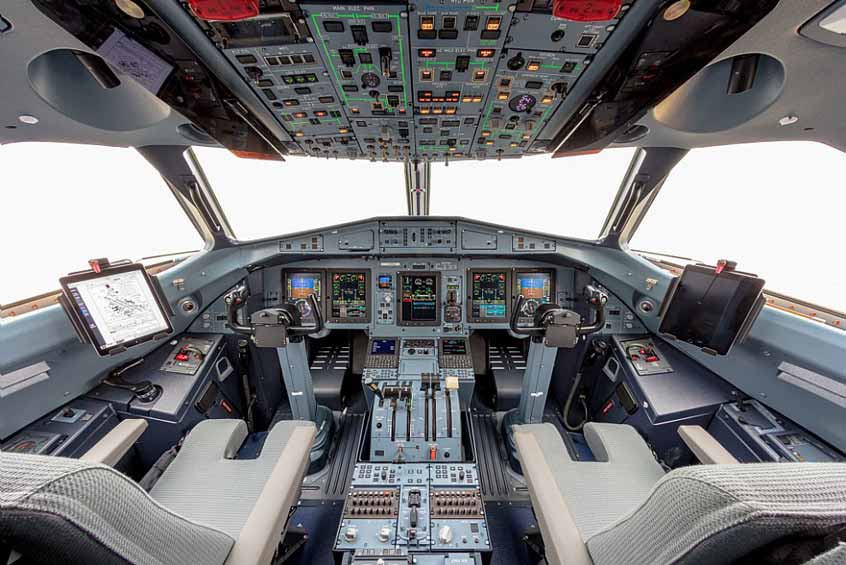
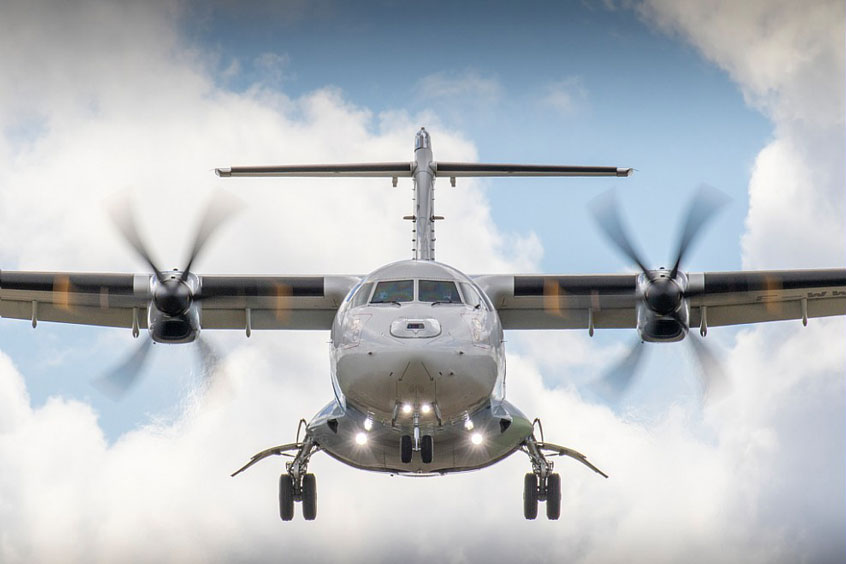
The aircraft as engineered: what it is built from, the systems it flies with, and its configuration — each box a theme.
Notable technologies — each tag names a technology on our research record for this aircraft, with its fitting status: Primary, Standard, Option or Planned.
Technical reference compiled with AI research; a value appears only where two independent research passes and a web fact-check agree. Gaps are deliberate.
Supplier geography and market analysis for this program — with an Analytics subscription.
Subscribe| Variant | Launch / first flight | Production end | Notes |
|---|---|---|---|
| ATR 42-300 | 1981 / 1984 | 1996 | Baseline variant. |
| ATR 72-200 | 1986 / 1988 | 1997 | Baseline variant, stretched version of 42 series. |
| ATR 42-500 | 1993 / 1994 | Production: 32 (2025) ATR delivered 32 aircraft in 2025, three fewer than in 2024 and below guidance, as persistent supply chain disruptions impacted critical components. The company described 2025 as a 'transition year' and targeted a 20% delivery increase in 2026. Net o [high]. Upgraded from 42-300, with more powerful engines. | |
| ATR 72-500 | 1996 / 1996 | Variant with upgraded engines, formerly ATR 72-210A. | |
| ATR 42-600 | 2007 / 2010 | Based on 42-500 but with improved cabin. | |
| ATR 72-600 | 2007 / 2009 | Upgraded variant, upgrades similar to 42-600. | |
| ATR 72-600F | 2017 / 2020 | Factory built freighter variant. | |
| ATR 42-600S | 2019 / 2022 | 2024 | 42 passenger, STOL variant, development ceased to focus on existing portfolio. |
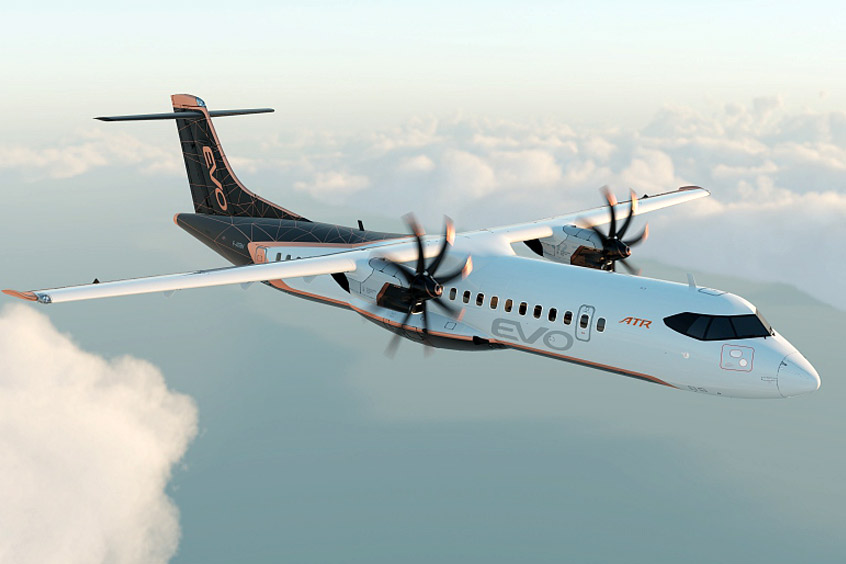
| ATR EVO | 2022 / | Hybrid electric variant. |
| ATR Avions de Transport Regional | News |
The program’s dated history — milestones, contracts, supplier selections and facilities, each linked to its source. Log in to view.
Information on this page is compiled from a variety of published sources; links do not necessarily imply recommendation or confirmation by the airframe manufacturer.
Corrections go straight to the editorial team that maintains this directory.