
Aircraft program
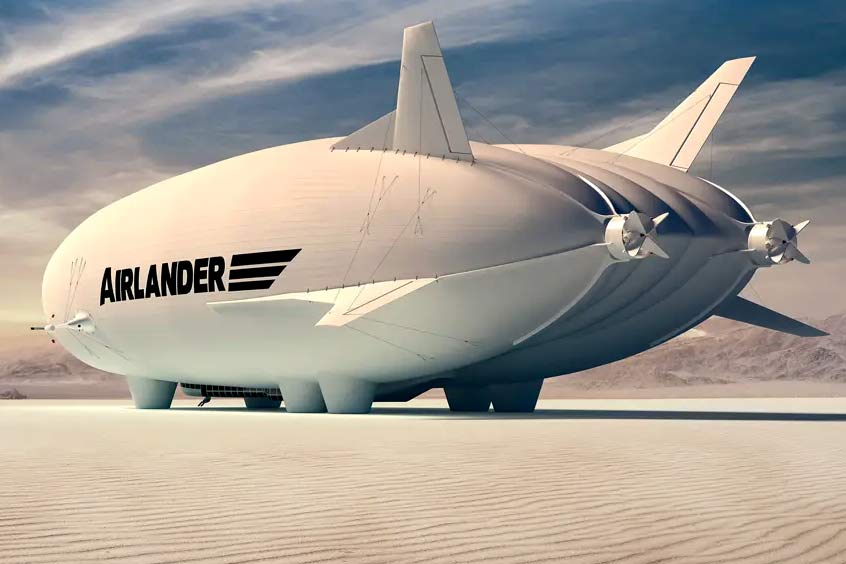
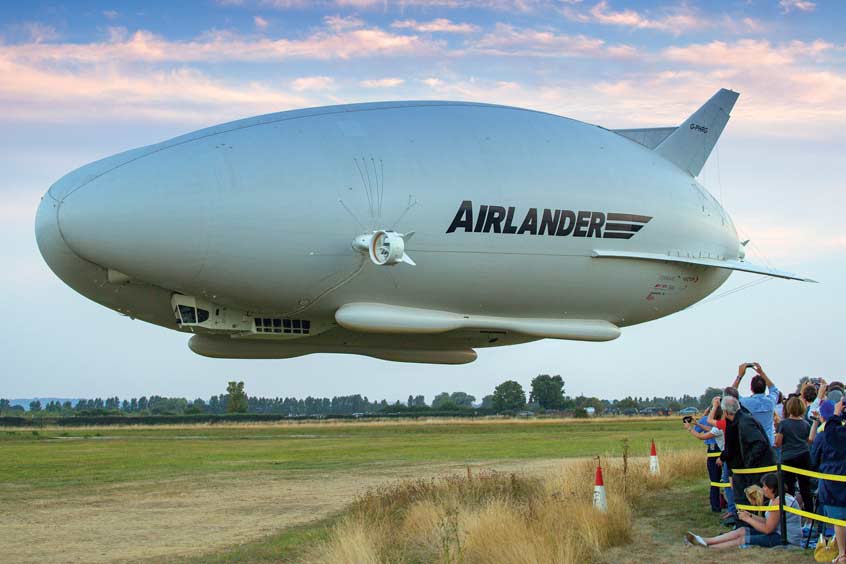
Carbon fibre and glass fibre composite structures are used for the rigid elements of the 45.5 m long aircraft, including the fins and payload module.
The hull is made of a laminated fabric consisting of multi-layered Vectran weave, Tedlar, Mylar and polyurethane, and fills with helium.
The landing gear is fully retractable in flight, and the air-cushion landing system comprises of hover skirts on the underside of the outer hulls that also provide amphibious capability.
A wheeled, casting ground cradle supports the fuel tank and there is a stowable mooring mast.
Fibre optic control systems are used throughout. The low-pressure pneumatic system powers the flight control actuators and provides low susceptibility to lightning strike and electromagnetic interference. There is a dual-channel, optically signalled flight control system, plus pressure control by multiple airbags fore and aft in each of the two outer hulls.
The aircraft as engineered: what it is built from, the systems it flies with, and its configuration — each box a theme.
Technical reference compiled with AI research; a value appears only where two independent research passes and a web fact-check agree. Gaps are deliberate.
Supplier geography and market analysis for this program — with an Analytics subscription.
Subscribe| Variant | Launch / first flight | Production end | Notes |
|---|---|---|---|
| HAV Airlander 10 | 2012 / 2012 | Hybrid airship, originally built for US Army's Long Endurance Multi-intelligence Vehicle (LEMV) programme. | |
| HAV E-HAV1 | 2019 / | Electric variant, to develop technologies for Airlander 10's electrification. |
| Hybrid Air Vehicles Ltd | News |
The program’s dated history — milestones, contracts, supplier selections and facilities, each linked to its source. Log in to view.
Information on this page is compiled from a variety of published sources; links do not necessarily imply recommendation or confirmation by the airframe manufacturer.
Corrections go straight to the editorial team that maintains this directory.