PRESS RELEASE
Issued by: .
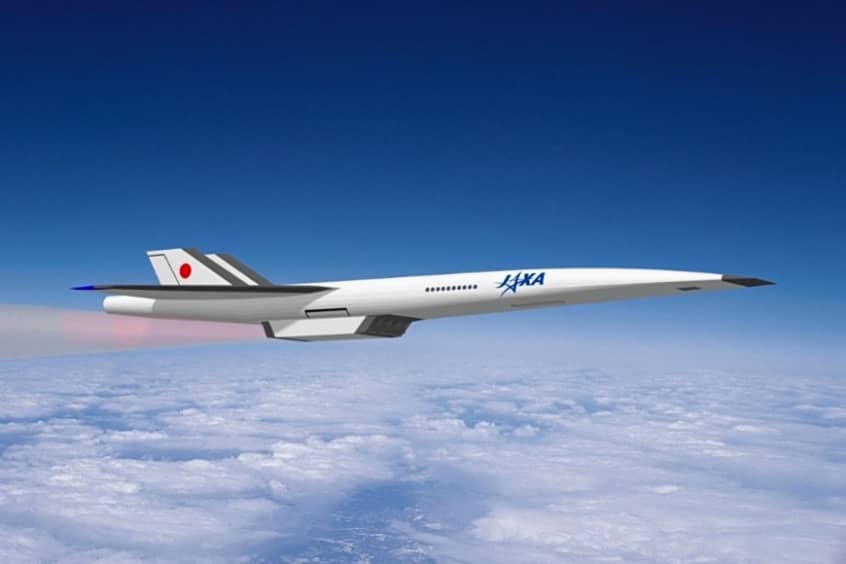
Photo: JAXA
The concept of hypersonic passenger aircraft expected in the future.
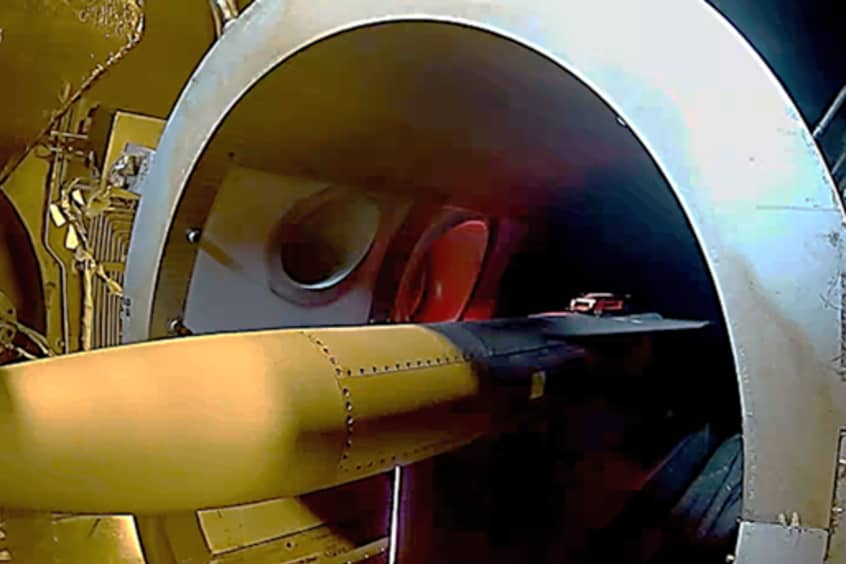
Photo: JAXA
Combustion experiment of a polar supersonic experimental aircraft (simulating the Mach 5 flight state with a test facility).
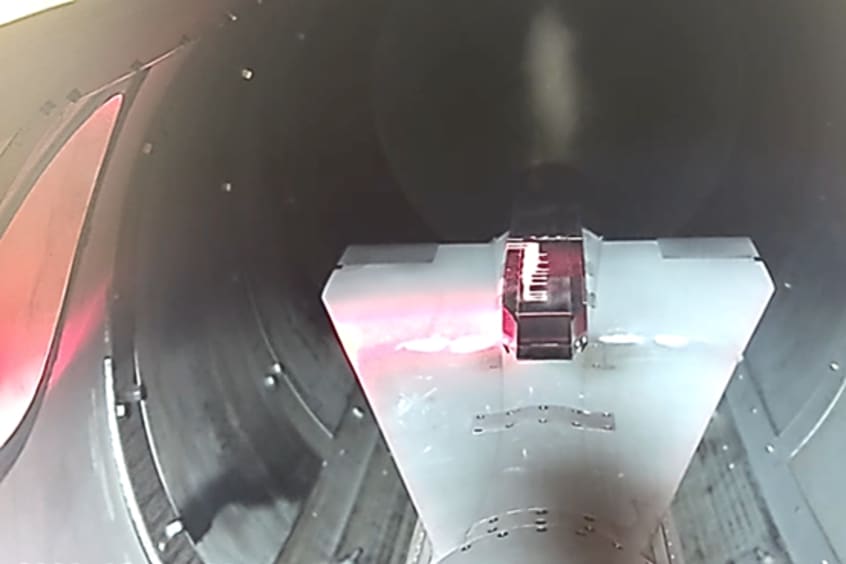
Photo: JAXA
Ramjet engine combustion operation.
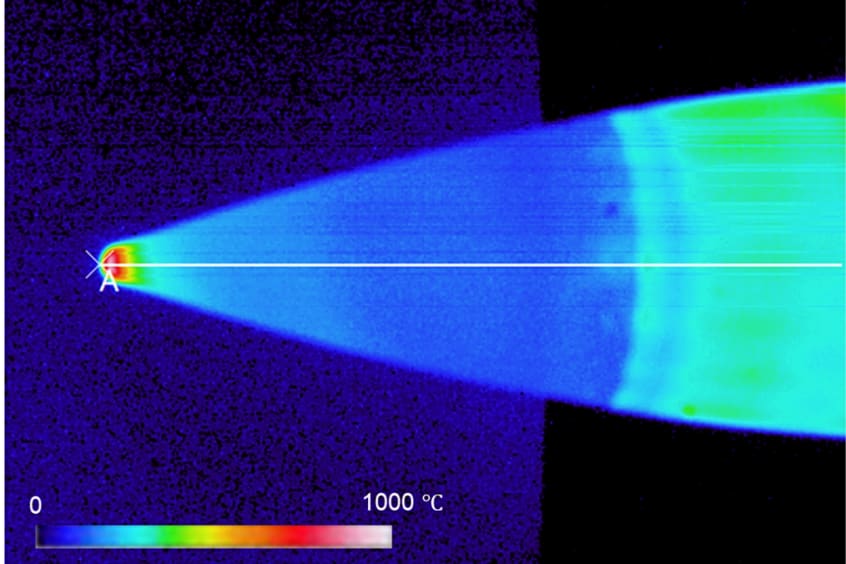
Photo: JAXA
Measurement of heat resistance performance of experimental machine.
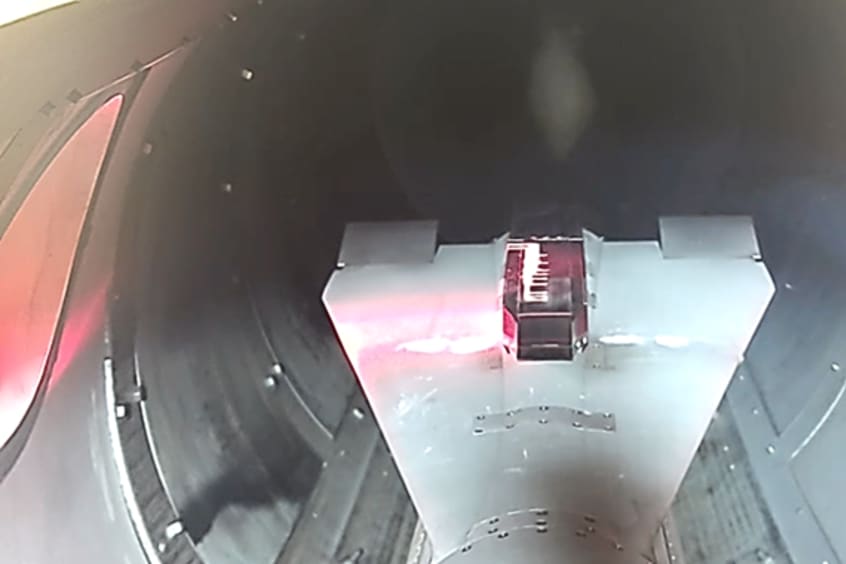
Photo: JAXA
Operation of the steering wing of the experimental aircraft
Waseda University (located in Shinjuku-ku, Tokyo; President: Aiji Tanaka), in collaboration with the Japan Aerospace Exploration Agency (JAXA), the University of Tokyo, and Keio University, has successfully conducted Japan's first Mach 5 combustion experiment using a hypersonic experimental aircraft at the JAXA Kakuda Space Center (Kakuda City, Miyagi Prefecture), utilising the ramjet engine test facility. This experiment provides valuable data for the realisation of future hypersonic passenger aircraft capable of crossing the Pacific Ocean in two hours, and spaceplanes reaching altitudes of approximately 100 km.
Development status and experimental content of this research
Regarding the hypersonic air-intake engine technology, in which Japan is leading the research and development, this research aims to conduct flight demonstrations in a Mach 5 environment and to establish integrated airframe/propulsion control technology that controls the airframe and engine as a single unit.
A joint research team from Waseda University, the University of Tokyo, Keio University, and JAXA designed and manufactured a hypersonic experimental aircraft with a view to flight demonstrations using sounding rockets, etc., and conducted combustion experiments simulating a Mach 5 flight environment equivalent to five times the speed of sound (approximately 5,400 km/h). Waseda University was responsible for coordinating this research and for the design and analysis of the air intake that draws in the hypersonic airflow. The characteristics and novelty of the experimental aircraft manufactured this time and the experimental content carried out are as follows:
A major characteristic of hypersonic flight is the extremely strong mutual interference between the airframe and the engine. The shock waves formed around the aircraft change depending on the flight Mach number and attitude, significantly altering the airflow conditions into the engine. Furthermore, engine thrust directly affects the aircraft's motion, meaning the aircraft and engine behave as a strongly interconnected system. Therefore, in hypersonic aircraft, instead of designing the aerodynamics of the aircraft and the combustion of the engine separately, an integrated aircraft/propulsion design and control approach is necessary, treating them as a single system.
In this research, we implemented an integrated design to realise a hypersonic experimental aircraft with a minimum required length of 2 metres, enabling stable engine operation and aircraft control even in hypersonic flight environments. At Mach 5 flight, the air temperature around the aircraft reaches approximately 1,000°C due to air compression and heating. To cope with such high temperatures, we designed a lightweight, heat-resistant structure combining heat-resistant materials and a heat-shielding structure, creating a structure that allows the aircraft and internal electronic equipment to function normally even under high temperatures.
In the experiments using the aforementioned hypersonic experimental aircraft, combustion experiments were conducted in a hypersonic wind tunnel simulating Mach 5 flight conditions using the ramjet engine test facility at the JAXA Kakuda Space Center (Kakuda City, Miyagi Prefecture). The specific experimental items and their details are as follows.
– Combustion experiment of the hypersonic experimental aircraft (simulating Mach 5 flight conditions in the test facility)
– Combustion operation of the ramjet engine
– Measurement of the heat resistance performance of the experimental aircraft
– Operation of the control surfaces of the experimental aircraft
Results of this experiment and future developments
This experiment confirmed the validity of the integrated design of the aerodynamics, propulsion, and structure. Furthermore, we conducted measurements of the aircraft surface temperature distribution to verify the design analysis method for the heat-resistant structure, and measurements of the exhaust temperature field to investigate the impact of hydrogen fuel ramjet engine exhaust on the global environment, thereby obtaining fundamental data for the future practical application of hypersonic aircraft.
Based on these experimental results, we are planning to conduct flight experiments at approximately Mach 5 by mounting a hypersonic experimental aircraft on a sounding rocket or similar vessel. If hypersonic flight technology is established, it is expected to lead to the realisation of "hypersonic passenger aircraft" capable of crossing the Pacific Ocean in two hours, and "spaceplanes" that can reach an altitude of approximately 100 km.
Research Grant
- Research Grant Name: Grant-in-Aid for Scientific Research, Basic Research (S)
- Research Project Name: Construction of a Hypersonic Flight Testbed Using a Sounding Rocket and Demonstration of Integrated Aircraft Propulsion Control
- Principal Investigator (Affiliation): Tetsuya Sato (Waseda University)
| Contact details from our directory: | |
| JAXA Japan Aerospace Exploration Agency | Technical/Eng/Scientific Studies, Research/Consulting Services, Wind Tunnels |
| Related directory sectors: |
| Rockets & Scramjets |
| Design |

Weekly news by email:
See the latest Bulletin, and sign up free‑of‑charge for future editions.
CubCrafters secures EASA approval for 215 HP XCub

Airbus expands Belfast wing plant ahead of A220 production increase
GKN displays UAV demonstrator and engine