From manufacturing tough parts to developing smart software, Aurora Flight Sciences is proud to support the MQ-25A Stingray.
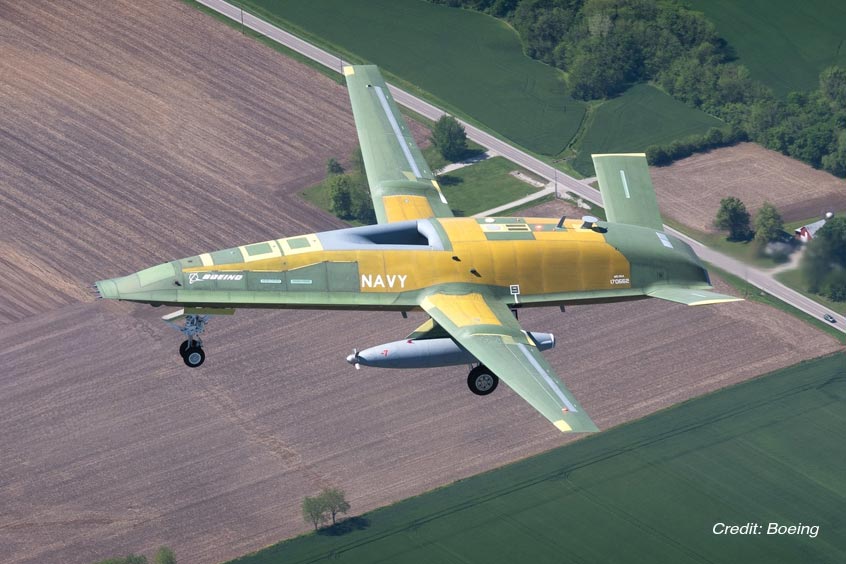
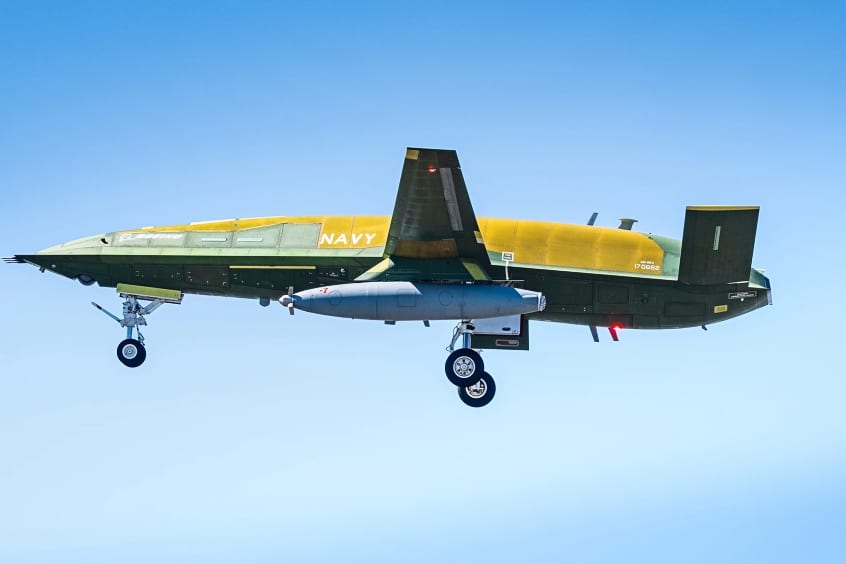
On 25 April, the U.S. Navy's first MQ-25A Stingray, an unmanned aerial refueller, successfully completed its first flight. Boeing subsidiary Aurora Flight Sciences played a significant role by providing manufacturing and engineering expertise that helped solidify the aircraft's readiness for this historic milestone.
Delivering Components That Withstand Challenging Environments
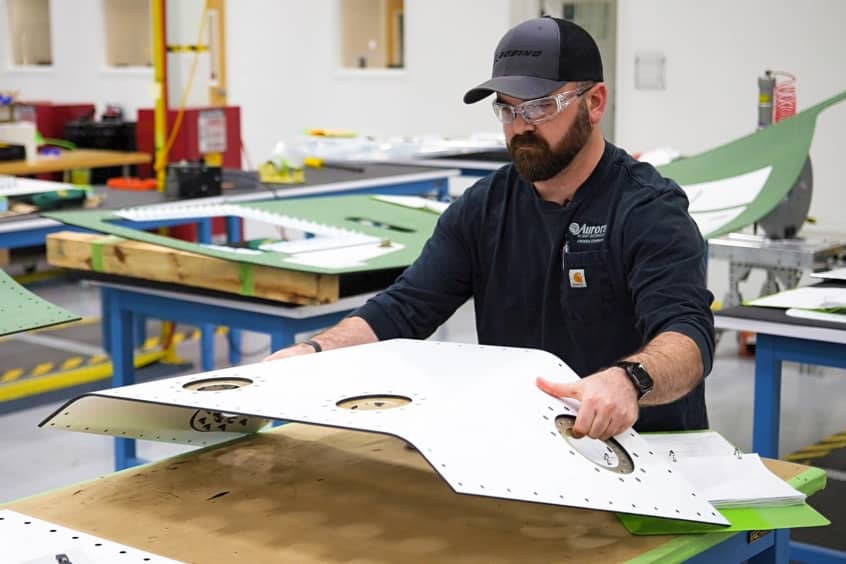
At its facilities in Mississippi and West Virginia, Aurora produced 145 components and assemblies for the flight test aircraft. This work included nearly the entire exterior surface of the aircraft, which is made up of lightweight, high-strength composite skins designed to withstand the harsh, corrosive conditions of carrier-based operations. Some components, including the tail stabilators, fuselage edges, and engine inlet, were also designed and analysed by Aurora engineers in Virginia.
Across multiple MQ-25A builds, Aurora has delivered over 1,100 components and assemblies in total so far. Aurora's Mississippi team delivers the majority of the pieces including fuselage skins, door assemblies, and wing parts; while West Virginia supplies the aircraft's complete tail assembly, as well as airframe, fuselage, and wing parts.
Advancing Software for Reliable Autonomous Operation
Aurora supported flight software development by embedding its software and autonomy engineers directly into a unified Boeing team. The MQ-25A is an autonomous aircraft that responds to commands from Air Vehicle Pilots in the Unmanned Carrier Aviation Mission Control System MD-5 Ground Control Station (GCS), enabling the aircraft to taxi, take off, fly and land autonomously.
Aurora engineers enhanced Guidance, Navigation, and Control (GNC) systems, streamlined software-directed mission procedures, and validated the software's response to demanding operational environments. This work improves aircraft safety and reliability through changing conditions and operations such as wind, turbulence, ship-relative manoeuvres, and catapult launches.
Expanding Capabilities for the US Navy
As the Navy's first operational carrier-based unmanned aircraft, the MQ-25A Stingray will extend the reach of the carrier air wing through unmanned aerial refuelling and manned-unmanned teaming. Aurora is proud to help deliver the cutting-edge technologies that make this capability possible, and to support the future of naval aviation.
| Contact details from our directory: | |
| Aurora Flight Sciences, a Boeing Company | Airframer |
| Boeing Defense, Space & Security | Airframer |
| Related aircraft programs: |
| Boeing MQ-25 Stingray |
| Related directory sectors: |
| Flight & Data Management |
| Composite Materials |

Weekly news by email:
See the latest Bulletin, and sign up free‑of‑charge for future editions.
HAL and Safran finalise Aravalli engine deal
JetZero raises $100m as Z4 nears flight test
Bombardier acquires MHI Canada Aerospace assets