PRESS RELEASE
Issued by: Pratt & Whitney
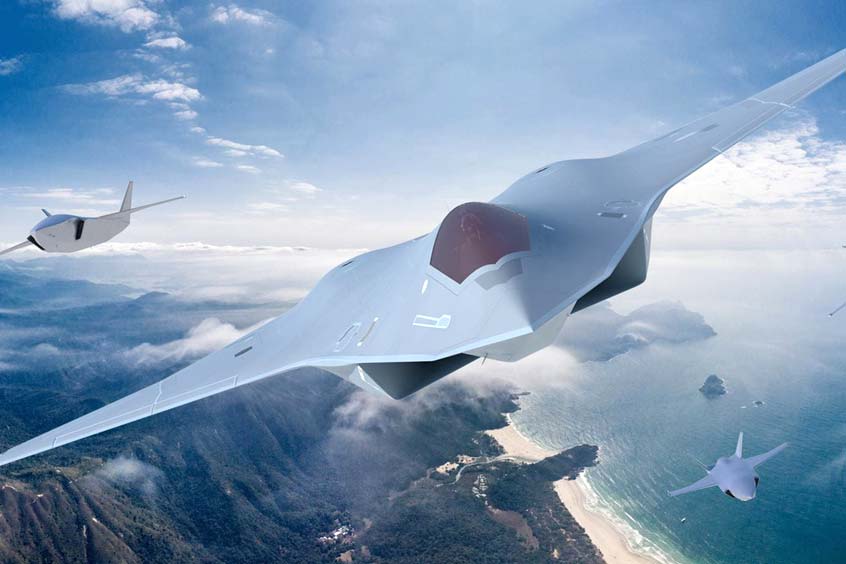
Photo: RTX
Pratt & Whitney’s NGAP offering passes first fully digital Detailed Design Review; XA103 prototype ground demonstrator expected to test in the late 2020s.
Pratt & Whitney, an RTX business, completed the detailed design review of its Next-Generation Adaptive Propulsion (NGAP) offering with the U.S. Air Force. Pratt & Whitney presented directly from its collaborative digital environment, providing reviewers with immediate access to all the data and material to satisfy the stringent criteria. Passing this fully digital evaluation allows the team to begin procuring hardware for the construction of its XA103 prototype ground demonstrator, which is expected to test in the late 2020s.
"The significance of this first fully digital review cannot be understated," said Jill Albertelli, president of Pratt & Whitney's Military Engines business. "Digital processes throughout the lifecycle are crucial to rapidly and efficiently deliver advanced warfighter capabilities. As we celebrate our centennial, the digital tools and processes that our NGAP team has demonstrated, and will continue to advance, will be at the foundation of our technology maturation for our future next-gen solutions."
Pratt & Whitney's NGAP engine has an adaptive architecture, enabling its components to actively adjust for optimized fuel efficiency, survivability, and power and thermal management, surpassing the capabilities of fourth- and fifth-generation engines. This step change in engine capability will help ensure the U.S. Air Force maintains air superiority and deters pacing challenges.
| Contact details from our directory: | |
| Pratt & Whitney | |
| Pratt & Whitney Military Engines | Turbofan Engines |
| Raytheon Technologies Corporation (Corporate Headquarters) | |
| Related aircraft programs: |
| Boeing F-47 |
| Related directory sectors: |
| Turbine Engines |

Weekly news by email:
See the latest Bulletin, and sign up free‑of‑charge for future editions.
Textron and Merlin unveil pilot-optional SkyCourier concept

G2E consortium wins 18-month GCAP electronics contract
GE advances XA102 adaptive cycle engine