In aviation, reputation is not built through advertising. It is built through structure, discipline, and performance over time.
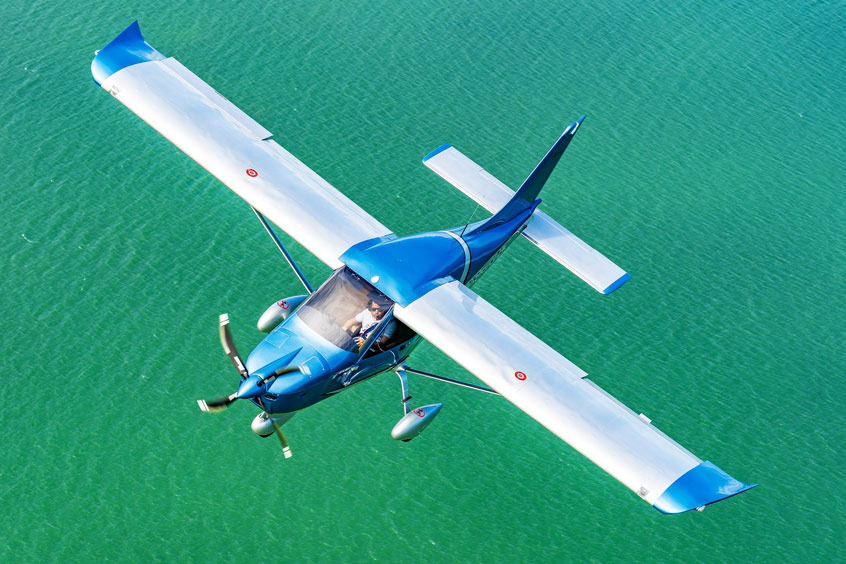
With the launch of the Montaer MC-04, Montaer is making a deliberate statement to the industry: this is not an entry-level novelty or lifestyle aircraft. It is a serious aircraft for serious pilots — engineered for structured flight training, demanding cross-country missions, and long-term legacy ownership.
At a time when global aviation faces a sustained pilot shortage and the FAA’s MOSAIC modernization reshapes the Light Sport category, the MC-04 arrives not as an experiment, but as a prepared response.
Designed For Responsibility
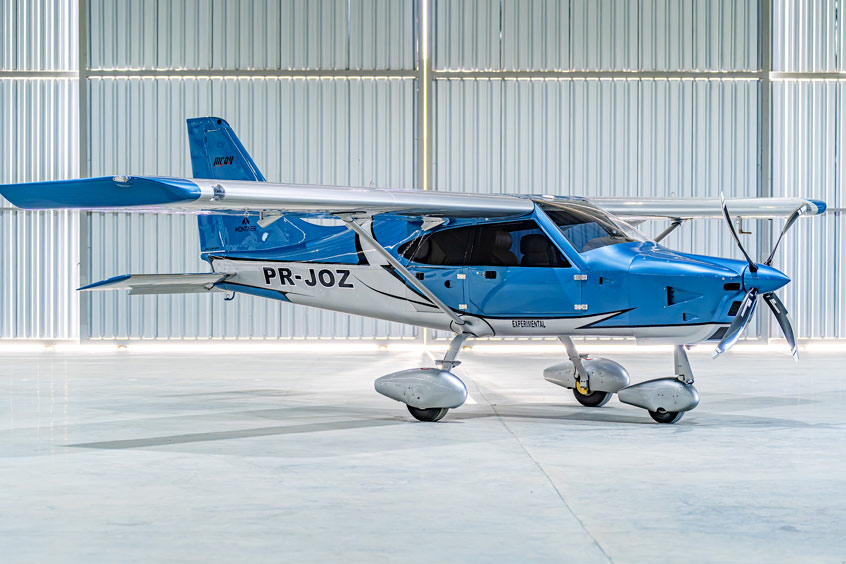
The MC-04 reflects institutional thinking. Its all-metal semi-monocoque airframe is reinforced by a welded 4130 chromoly steel safety cell, delivering structural rigidity and crashworthy protection uncommon in its class. This is not lightweight construction for marketing appeal; it is structural engineering designed for durability and longevity.
Training aircraft accumulate thousands of landings, repetitive power cycles, and extended operating hours. Private touring aircraft face weather systems, long-range demands, and payload variability. The MC-04 was engineered with both missions in mind — without compromise.
Solid rivet construction, aviation-grade aluminum, and rigorous multi-phase quality assurance signal a clear philosophy: reputation must be earned in metal.
Built For The Modern Training Environment
Flight training today requires more than analog instrumentation and minimal systems. Students advancing toward commercial and airline pathways train in glass cockpit ecosystems. Transitioning from outdated platforms to modern avionics mid-career introduces unnecessary cost and adaptation risk.
The MC-04 closes that gap from the beginning.
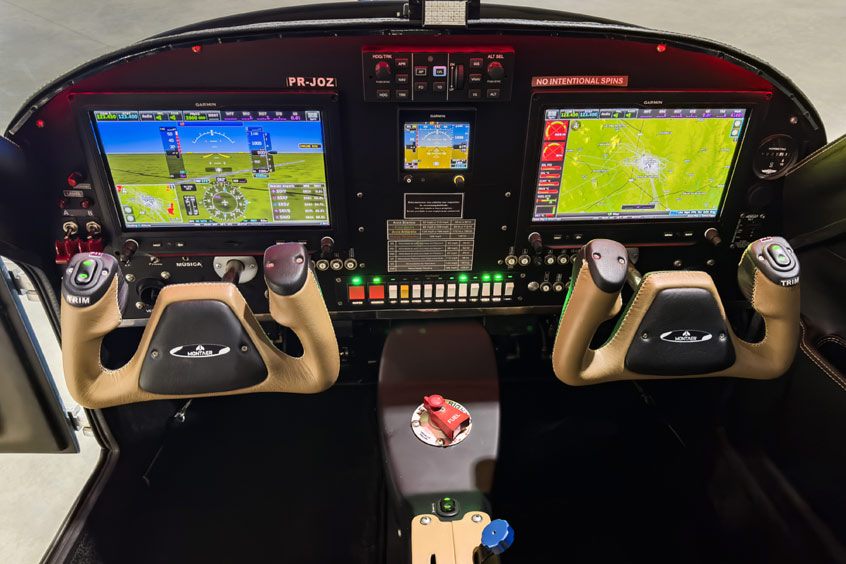
Standard dual 10.6-inch Garmin G3X Touch displays establish a fully integrated digital cockpit. The Platinum IFR configuration elevates the platform further with the Garmin GTN 750Xi navigator, full RNAV, LPV, ILS, and VOR approach capability, integrated digital autopilot with envelope protection, synthetic vision, ADS-B traffic and weather, and redundant backup instrumentation.
This architecture transforms the MC-04 into a legitimate IFR training platform. Students develop instrument discipline in a cockpit that mirrors professional environments. Instructors benefit from enhanced situational awareness and safety redundancy. Schools gain a fleet asset aligned with the future rather than the past.
It is not simply equipped for IFR — it is structured for instrument education.
Performance With Authority
A serious aircraft must deliver performance that commands respect while maintaining operational efficiency.
Powered by the turbocharged Rotax 916iS engine producing 160 horsepower, the MC-04 delivers strong climb performance exceeding 1,400 feet per minute and cruises at approximately 130 knots true airspeed. Complementing this powerplant is the advanced French DUC in-flight variable pitch propeller system — a lightweight carbon-fiber, constant-speed design engineered to optimize thrust across all phases of flight. By continuously adjusting blade pitch for maximum aerodynamic efficiency, the system enhances climb performance, refines cruise optimization, reduces noise, and contributes to lower fuel consumption.
The result is a finely harmonized propulsion package that maintains fuel efficiency near seven gallons per hour — a balance of capability and economy critical for training fleets and owner-operators alike.
Low stall speeds enhance safety margins for primary instruction. A service ceiling near 14,500 feet provides altitude flexibility for cross-country routing and IFR planning. The aircraft is forgiving in the pattern yet authoritative in cruise — a duality that defines aircraft built for long careers..
Cross-Country Without Compromise
Flight training may begin in the traffic pattern, but serious pilots are formed through distance.
With a structural maximum takeoff weight of 2,425 pounds and a useful load exceeding 1,200 pounds, the MC-04 transitions seamlessly from instructional platform to true four-seat touring aircraft. Fuel capacity supports endurance approaching six hours, enabling meaningful cross-country legs without constant refueling interruptions.
Commercial students building required long cross-country time, instrument candidates flying real-world approaches, and owner-operators traveling with family all benefit from the same platform. Few aircraft blend these missions with this level of structural integrity and avionics capability.
Inside the cabin, refinement meets functionality. Four usable seats, premium materials, ergonomic layout, and generous interior width create an environment suited for endurance rather than short demonstration flights. Comfort in aviation is not indulgence — it is operational sustainability.
Prepared For The MOSAIC Era
The MC-04 was engineered with regulatory foresight. As the FAA’s MOSAIC modernization expands performance privileges within the Light Sport and training categories, the aircraft’s structural envelope anticipates higher capability standards rather than reacting to them.
For flight schools, this reduces long-term regulatory uncertainty.
For owners, it provides future-proofing. For the industry, it signals strategic seriousness. Legacy, Not Marketing
For Bruno Santos, CEO of Montaer, the philosophy behind the MC-04 extends beyond specifications.
“Reputation in aviation is earned over decades, not marketing cycles. Every rivet, every structural decision, every avionics integration in the MC-04 reflects one principle: it must stand the test of time — in training environments, in cross-country missions, and in the hands of professionals who demand accountability.”
His statement reflects the company’s positioning: aviation is a discipline. Aircraft become part of a school’s identity. They shape careers. They carry families across states and countries. They accumulate stories measured in thousands of flight hours.
Legacy is not declared. It is built.
With the MC-04, Montaer is not simply entering a category. It is asserting a standard — that training aircraft can be modern without being fragile, that cross-country platforms can be efficient without sacrificing structural seriousness, and that the future of general aviation should be designed with accountability in mind.
The Montaer MC-04 is, simply put, a serious aircraft for serious pilots — and reputation begins there.
| Contact details from our directory: | |
| Montaer Aircraft LLC | Airframer |
| Garmin International | GPS, Transceivers, Radar Transponders, Position Indicators, Radio Communications Equipment, Instrument Landing Systems, Moving Maps, Flight Directors, Electronic Flight Instrument Systems, Flight Management Systems, Avionics Management Systems, Autopilots, Weather Mapping Radar, VOR (Omnirange) Receivers, Onboard Intercom Systems, Collision Avoidance Systems/TCAS, Radar/Radio Altimeters, Attitude and Heading Reference Systems, Magnetometers, Onboard Computers, Air Data Computers, Satellite Receivers, Automatic Flight Control Systems, Onboard Airport Navigation Systems, Terrain Awareness and Warning Systems, Head-Up Displays, Airborne Communication Systems, Engine Indicator Instruments, Storm-Warning Radar, Autothrottle Systems, ADS-B systems |
| DUC Hélices Propellers | Helicopter Rotors, Composite Propellers |
| BRP-Rotax GmbH & Co KG | Piston Engines |
| Related aircraft programs: |
| Montaer MC Series |

Weekly news by email:
See the latest Bulletin, and sign up free‑of‑charge for future editions.
CubCrafters secures EASA approval for 215 HP XCub

Airbus expands Belfast wing plant ahead of A220 production increase
GKN displays UAV demonstrator and engine