During the 2025 Airbus Summit held on 24 and 25 March, Airbus shared its latest plans for developing new commercial aircraft technologies that could be introduced from the second half of the 2030s.
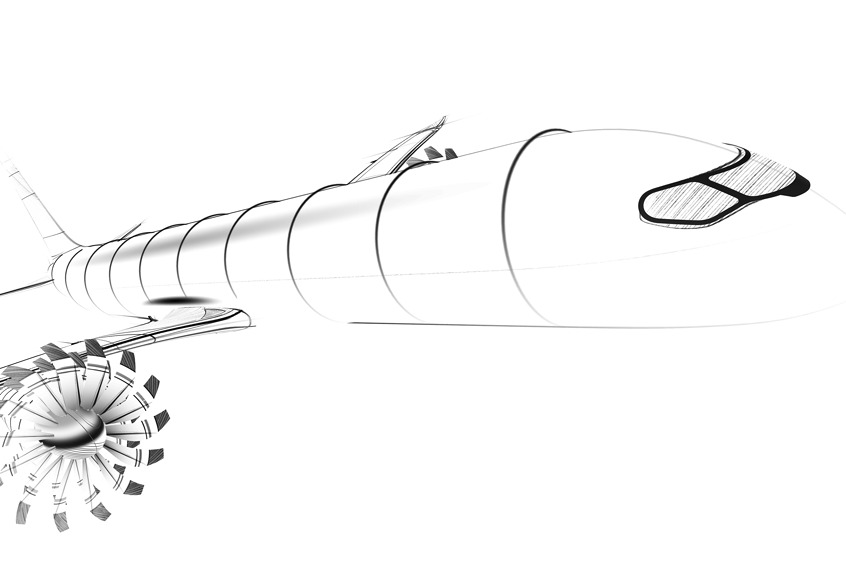
The company announced that its planned next-generation single-aisle aircraft could achieve a 20-30% improvement in fuel efficiency compared to current-generation aircraft and operate with up to 100% sustainable aviation fuel (SAF). Technologies currently under study include open fan engines, long foldable wings, next-generation batteries for hybrid-electric propulsion, lightweight materials and integrated connected systems.
Bruno Fichefeux, head of future programmes at Airbus, said: “Every second, an Airbus aircraft takes off – connecting people, cargo and business around the world. We have the most advanced aircraft portfolio in the market and the A321XLR is at the very forefront of today’s single-aisle aircraft technology. Now we are taking the best of what we’ve done and preparing another jump to make our single-aisle aircraft even better and pioneer the future of flight, when the time is right.”
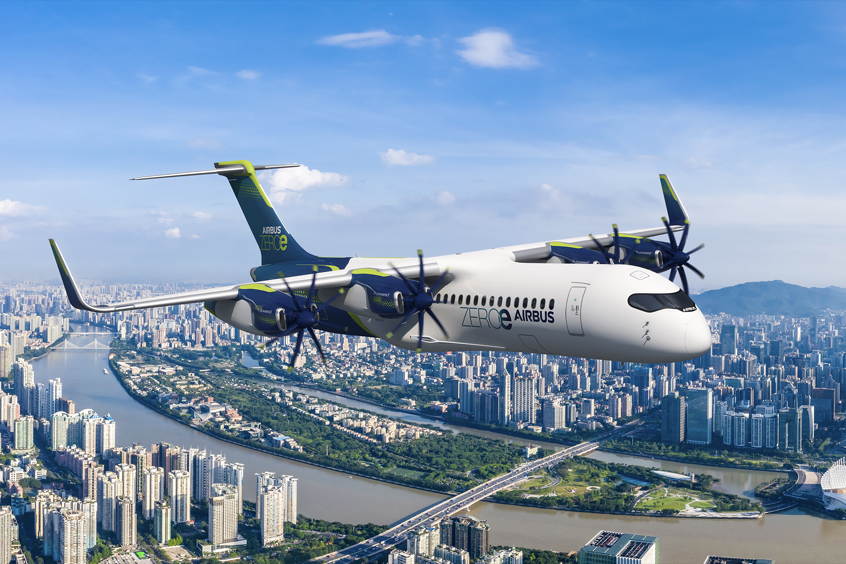
Airbus also presented an updated roadmap for its hydrogen-powered aircraft programme, ZEROe, including a fully electric fuel-cell-powered aircraft concept. This concept, currently being refined, features four electric propulsion engines rated at 2MW each, driven by fuel cell systems that convert hydrogen and oxygen into electricity. Hydrogen is stored in two liquid hydrogen tanks onboard the aircraft.
Fichefeux added: “Hydrogen is at the heart of our commitment to decarbonise aviation. While we've adjusted our roadmap, our dedication to hydrogen-powered flight is unwavering. Just as we saw in the automotive sector, fully electric aircraft powered by hydrogen fuel cells have the potential in the longer term to revolutionise air transport for the better, complementing the sustainable aviation fuel pathway.”
Glenn Llewellyn, head of the Airbus ZEROe project, said: “Over the last five years, we have explored multiple hydrogen-propulsion concepts, before down-selecting this fully electric concept. We are confident it could provide the necessary power density for a hydrogen-powered commercial aircraft and could evolve as we mature the technology. In the coming years, we will concentrate on advancing the storage, distribution and propulsion systems, while also advocating for the regulatory framework needed to ensure these aircraft can take flight.”
In 2023, Airbus previously demonstrated a 1.2MW hydrogen-propulsion system and, the following year, completed end-to-end tests of integrated fuel-cell components. In collaboration with Air Liquide Advanced Technologies, Airbus has developed the Liquid Hydrogen BreadBoard (LH2BB) demonstrator in Grenoble, France, with comprehensive ground tests scheduled to take place the Electric Aircraft System Test House in Munich in 2027.
| Contact details from our directory: | |
| Airbus S.A.S. | Airframer |
| Air Liquide | Fuel Inerting Systems, Fuel Tanks & Systems, Oxygen & Air Regulating Equipment, Oxygen Generation Systems, Oxygen Masks |
| Related aircraft programs: |
| Airbus ZEROe |
| Airbus A320 |

Weekly news by email:
See the latest Bulletin, and sign up free‑of‑charge for future editions.
Textron and Merlin unveil pilot-optional SkyCourier concept

G2E consortium wins 18-month GCAP electronics contract
GE advances XA102 adaptive cycle engine