
Airframer news
29/01/2026
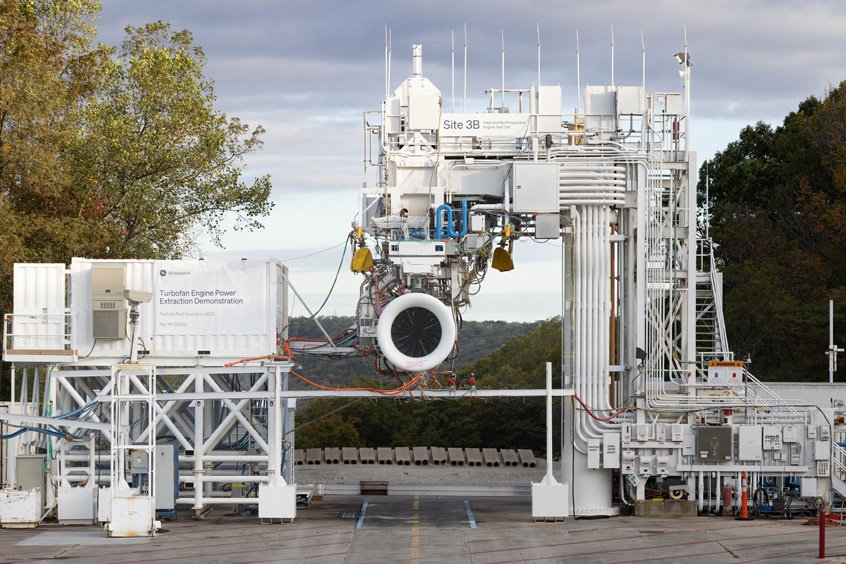
Testing at Peebles confirmed that a hybrid electric turbofan can move and control electrical power without relying on energy storage.
GE Aerospace has completed hybrid electric ground testing using a modified Passport engine at its Peebles Test Operation site as part of NASA’s Turbofan Engine Power Extraction Demonstration.
The test successfully demonstrated power transfer, extraction and injection from a high-bypass commercial turbofan, meeting and exceeding NASA’s performance benchmarks.
GE is developing a narrowbody hybrid electric engine architecture that embeds motor/generators within a gas turbine to support power needs during various flight phases. The system can operate with or without energy storage, offering flexibility for different aircraft types.
“Hybrid electric propulsion is central to how GE Aerospace is redefining the future of flight,” says Arjan Hegeman, vice president of future of flight at GE Aerospace. “Our latest milestone successfully demonstrated a narrowbody hybrid electric engine architecture that doesn’t require energy storage to operate.”
The test deepens GE’s understanding of system integration and controls, forming part of wider development under the CFM International RISE programme, a joint technology effort with Safran Aircraft Engines.
The RISE programme, launched in 2021, has already completed more than 350 tests and 3,000 endurance cycles across Open Fan, compact core and hybrid electric architectures, aiming for a 20 per cent fuel burn improvement over today’s engines.
The milestone builds on GE’s prior hybrid propulsion tests, including a megawatt-class system at 45,000 ft and a 2025 partnership with BETA Technologies to develop turbogenerators for advanced air mobility.