Photo: GE Aerospace
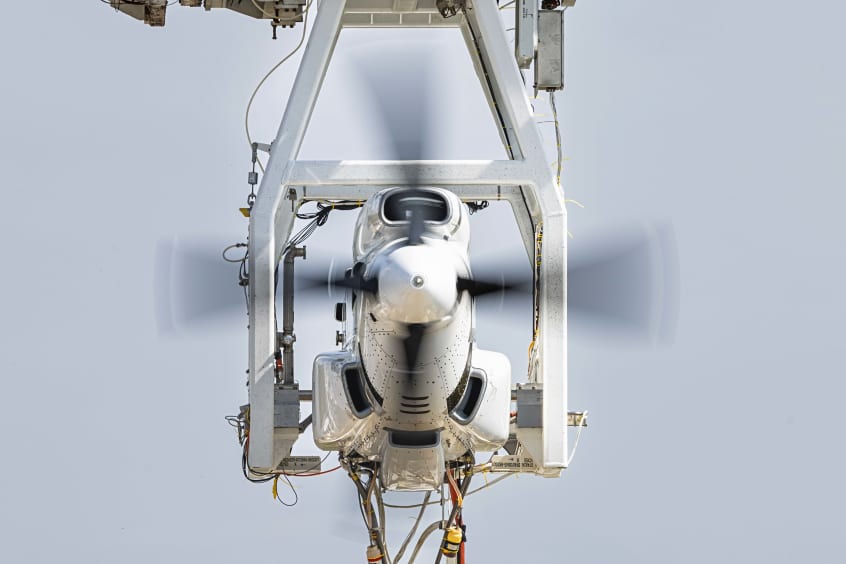
The megawatt-class system combines electric propulsion components with a CT7 gas turbine engine.
GE Aerospace has completed testing of a megawatt-class hybrid electric engine system developed through NASA's Electrified Powertrain Flight Demonstration (EPFD) project, moving the technology closer to flight tests.
The ground campaign marked the first validation of the company's complete integrated hybrid electric propulsion system, bringing together GE Aerospace-developed motor/generators, power converters and inverters, controllers, Dowty propellers, Avio Aero gearboxes and a CT7 engine. BAE Systems supplied the batteries while Boeing subsidiary Aurora Flight Sciences provided the nacelle.
Conducted at Peebles Test Operation in Ohio, the tests simulated taxi, take-off, climb and cruise conditions. The system successfully powered the propeller and generated power to the battery using flightworthy components designed to meet commercial-grade safety and reliability requirements.
Arjan Hegeman, vice president for future of flight at GE Aerospace, says: “Step by step, we're proving hybrid electric engine technology for next-generation commercial aircraft. This latest ground test of a complete hybrid electric powertrain positions GE Aerospace to have the technologies ready to meet customer needs for greater durability, efficiency and range in future propulsion systems.”
The achievement follows more than a decade of development work on hybrid electric propulsion technologies. GE Aerospace first demonstrated an electric motor-driven propeller in 2016 before completing what it described as the world's first test of a megawatt-class and multi-kilovolt hybrid electric propulsion system under simulated altitude conditions in 2022. In 2025, the company also demonstrated a narrowbody hybrid electric configuration through NASA's HyTEC project.
Hegeman adds: “The ground test is a major turning point in our understanding of hybrid electric powertrains for aviation and a fundamental building block for the future.”
The work also supports technology development under the CFM International RISE programme, launched in 2021 by GE Aerospace and Safran Aircraft Engines. The programme has completed more than 350 tests and 3,000 endurance cycles across technologies including Open Fan architectures, compact cores and hybrid electric systems, with a target of achieving more than 20% lower fuel burn than current commercial engines.
| Contact details from our directory: | |
| GE Aerospace Engines | Turbofan Engines, Turboprop Engines, Turboshaft Engines |
| Avio Aero (GE Aerospace) | Aircraft Structural Components, Airframer, APU Components, CIM Software, Combustion Chambers, Compressors, Engine Health Monitoring, Engine Parts, Gear Drives, Gearboxes, Metal & Alloy Castings, Oil Tanks, Rotating & Non-Rotating Seals, Turbine Engine Blades, Turboprop Engines |
| Dowty Propellers | Composite Propellers, Synchrophasers |
| Aurora Flight Sciences, a Boeing Company | Airframer |
| BAE Systems Electronic Systems | Air-to-Ground Data Links, Airborne Electrical Power Supplies, Automatic Flight Control Systems, Battery Chargers/Analysers, Electronic Warfare Systems, Engine Controls, Fly-by-Wire Systems, GPS, Lithium-ion Batteries, Missiles, Power Conversion Equipment, Power Distribution Equipment, Radar Reconnaissance Equipment, Radio Communications Equipment, Weapons Countermeasures |
| Boeing Commercial Airplanes | Airframer |
| CFM International Inc. | Turbofan Engines |
| NASA Electric Aircraft Testbed (NEAT) | Testing Services |
| Safran Aircraft Engines | Turbine Engine Blades, Turbofan Engines |
| Beta Technologies | Airframer |
| Related directory sectors: |
| Engine Controls & Monitoring |

Weekly news by email:
See the latest Bulletin, and sign up free‑of‑charge for future editions.
CubCrafters secures EASA approval for 215 HP XCub

Airbus expands Belfast wing plant ahead of A220 production increase
GKN displays UAV demonstrator and engine