PRESS RELEASE
Issued by: Airbus S.A.S.
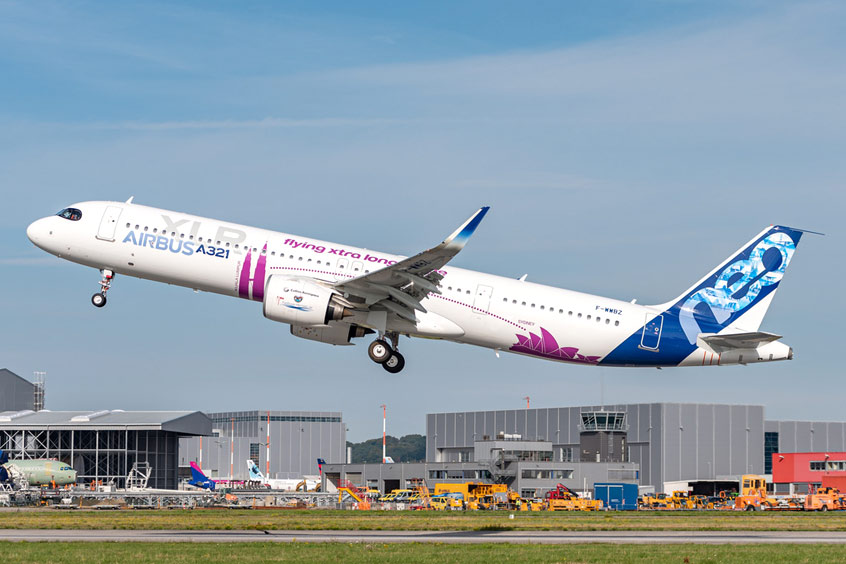
Photo: Airbus Operations GmbH
A321XLR Test Aircraft powered by Pratt&Whitney engines taking off
The European Union Aviation Safety Agency (EASA) has issued the Type Certificate for the Airbus A321XLR powered by Pratt & Whitney GTF engines. This follows the certification of the CFM LEAP-1A powered A321XLR in July 2024 and paves the way for the first customer aircraft with Pratt & Whitney engines to enter into service later this year.
Christian Scherer, CEO Commercial Aircraft at Airbus said, "The A321XLR already displays its great versatility crossing the Atlantic in daily operations. With the certification and entry-into-service of the GTF-powered A321XLR we will see more operators introduce this game changing aircraft. It is also good news for our customers’ passengers who will benefit from the convenience of new direct city to city connections with a heightened level of cabin comfort.”
The A321XLR sits side by side with widebodies in an airline’s fleet. It introduces the flexibility to add capacity, to open new routes, or even to continue operating existing ones when demand is variable. This is all while burning 30% less fuel per seat than previous generation competitor aircraft. The A321XLR’s new Airspace cabin will provide passengers long haul comfort in all classes.
The first A321XLR completed its maiden flight in June 2022. This was followed by an extensive test programme involving three test aircraft. In 2024, the A321XLR entered into service. So far more than 500 Airbus A321XLRs have been ordered.
| Contact details from our directory: | |
| Airbus S.A.S. | Airframer |
| CFM International Inc. | Turbofan Engines |
| Pratt & Whitney Large Commercial Engines | Turbofan Engines |
| Related aircraft programs: |
| Airbus A320 |
| Related directory sectors: |
| Turbine Engines |

Weekly news by email:
See the latest Bulletin, and sign up free‑of‑charge for future editions.
HAL and Safran finalise Aravalli engine deal
JetZero raises $100m as Z4 nears flight test
Bombardier acquires MHI Canada Aerospace assets