
Aircraft program
The fuselage is aluminium with skin and wing formed of composites. The fuselage skin incorporates graphite stringers and Toray composites, as do the wing and nacelles.
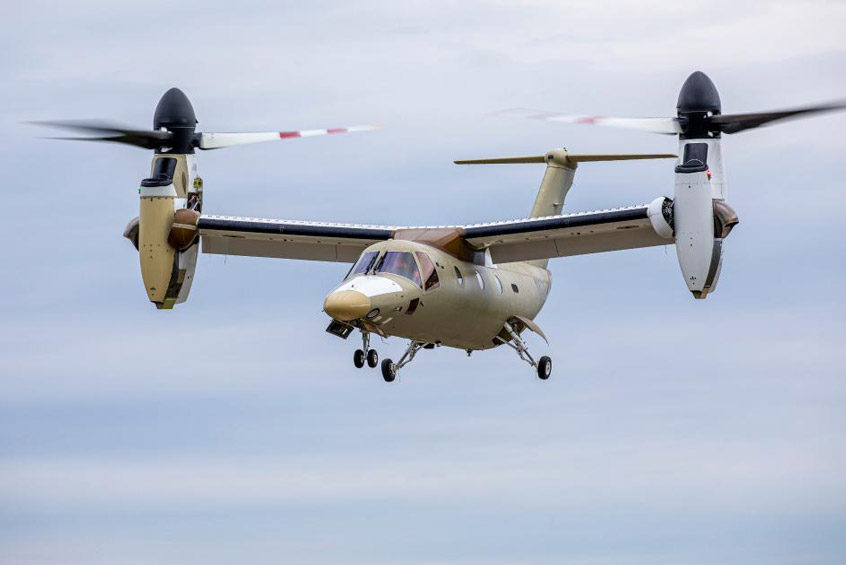
The T tail configuration has conventional elevators and no rudder. The horizontal tailplane can be raised above the rotor wake to minimise pitching at transition phase.
Size of wing determined by fuel requirement vs centre of gravity and safety. It has two-segment, trailing edge flaperons.
Titanium/composites cross shafts keep both proprotors turning in event of single engine failure. A manual screw jack facility enables the proprotors to be tilted into helicopter mode if cross shafts fail.
The aircraft as engineered: what it is built from, the systems it flies with, and its configuration — each box a theme.
Notable technologies — each tag names a technology on our research record for this aircraft, with its fitting status: Primary, Standard, Option or Planned.
Technical reference compiled with AI research; a value appears only where two independent research passes and a web fact-check agree. Gaps are deliberate.
Supplier geography and market analysis for this program — with an Analytics subscription.
Subscribe| Variant | Launch / first flight | Production end | Notes |
|---|---|---|---|
| Leonardo AW609 | 1997 / 2003 | Light utility tiltrotor, formerly known as BA609 due to prior Boeing influence. |
| Leonardo Helicopters | News |
The program’s dated history — milestones, contracts, supplier selections and facilities, each linked to its source. Log in to view.
Information on this page is compiled from a variety of published sources; links do not necessarily imply recommendation or confirmation by the airframe manufacturer.
Corrections go straight to the editorial team that maintains this directory.